Dressing for the Part: Guilds of London and Calico Critters
Join groups throughout the city to master various specialties and influence worldwide trade in Guilds of London.
Years ago, I recall tracking down an expansion for Guilds of London. On a whim, I spotted the base game on my shelf and to my surprise, there were brand new punchboards inside! That seemed like a strong indication to play again. I remembered the fun of flipping over resolved tiles to admire the various guild logos and coats of arms. Off to the city for some fun!
Game Overview
Game Name: Guilds of London
Publication Year: 2016
Designer: Tony Boydell
Artists: T. Boydell, K. Franz, C. Paull, & P. Soto
Publisher: Tasty Minstrel Games
Solo Mode: Official Solo Variant
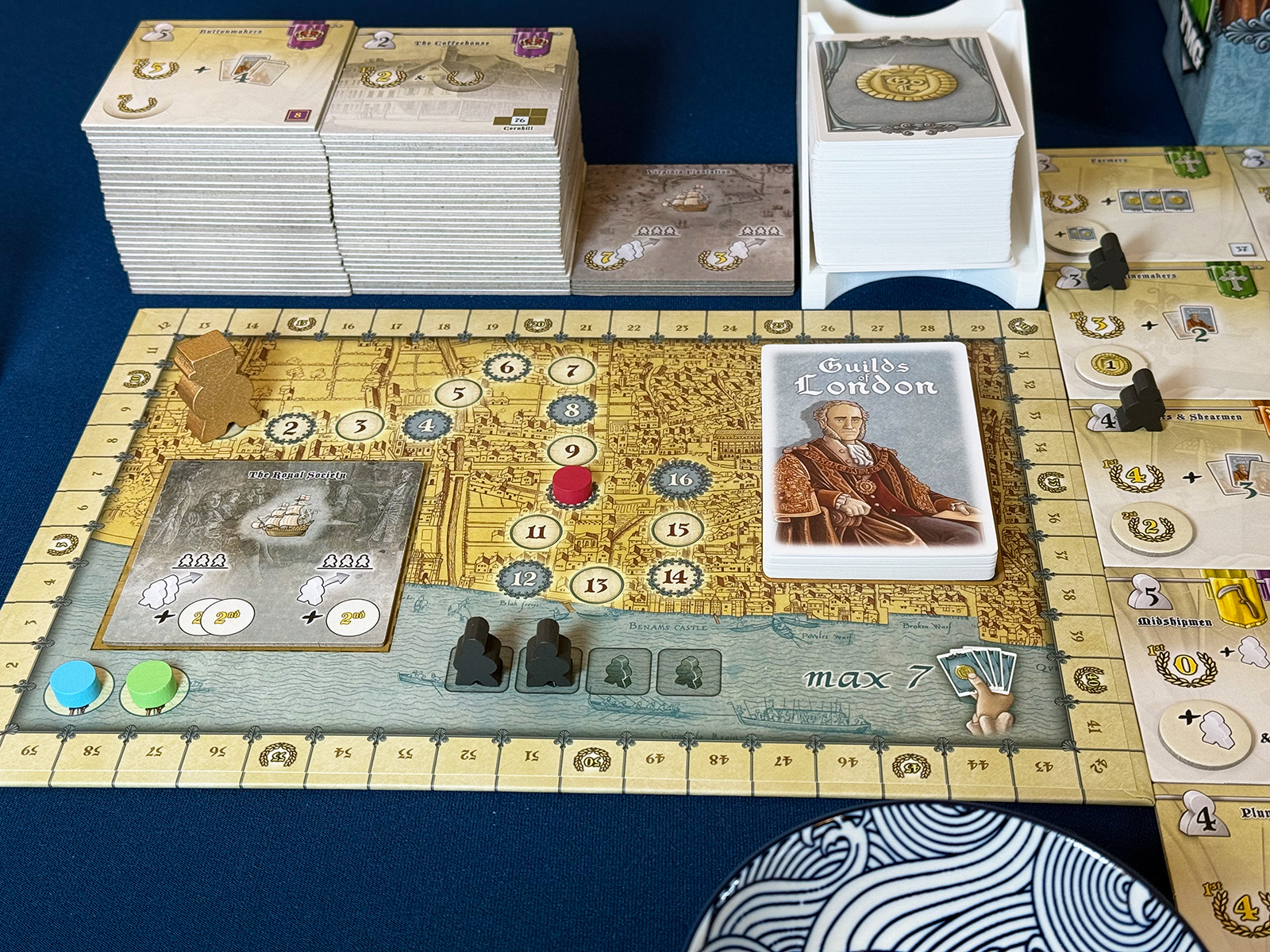
Over 10 rounds, guilds with enough liverymen are resolved. Various bonuses can be earned, often chaining in neat ways. Using cards to place and move liverymen is strategic, as the solo opponent has a bit of an advantage. With the right plans and strategic choices, guild masters influence the city!
First Play
December 12, 2021
Complexity
3
Latest Play
January 17, 2026
Expansions
1
Setup Time
10 Minutes
Lifetime Plays
5
Play Time
30 Minutes
High Score
81
Game Area
26" x 24"
Low Score
26
Plenty of Variety
The expansion isn’t entirely compatible with the solo mode, in that the unique ward setup isn’t followed. However, all of those new tiles added onto the unused tile stack. So many!
It’s possible to play almost 4 entire times with different tiles. 20 out of 79 are used… So close to fully unique!
My favorite part of the game are the resolved guilds, for these somewhat drab tiles flip over to reveal excellent coats of arms. A few are even based on actual guilds in existence.
I read through the rules a few times. It didn’t feel like the sequence made sense, and I took my time re-learning it all.
Guilds and Icons
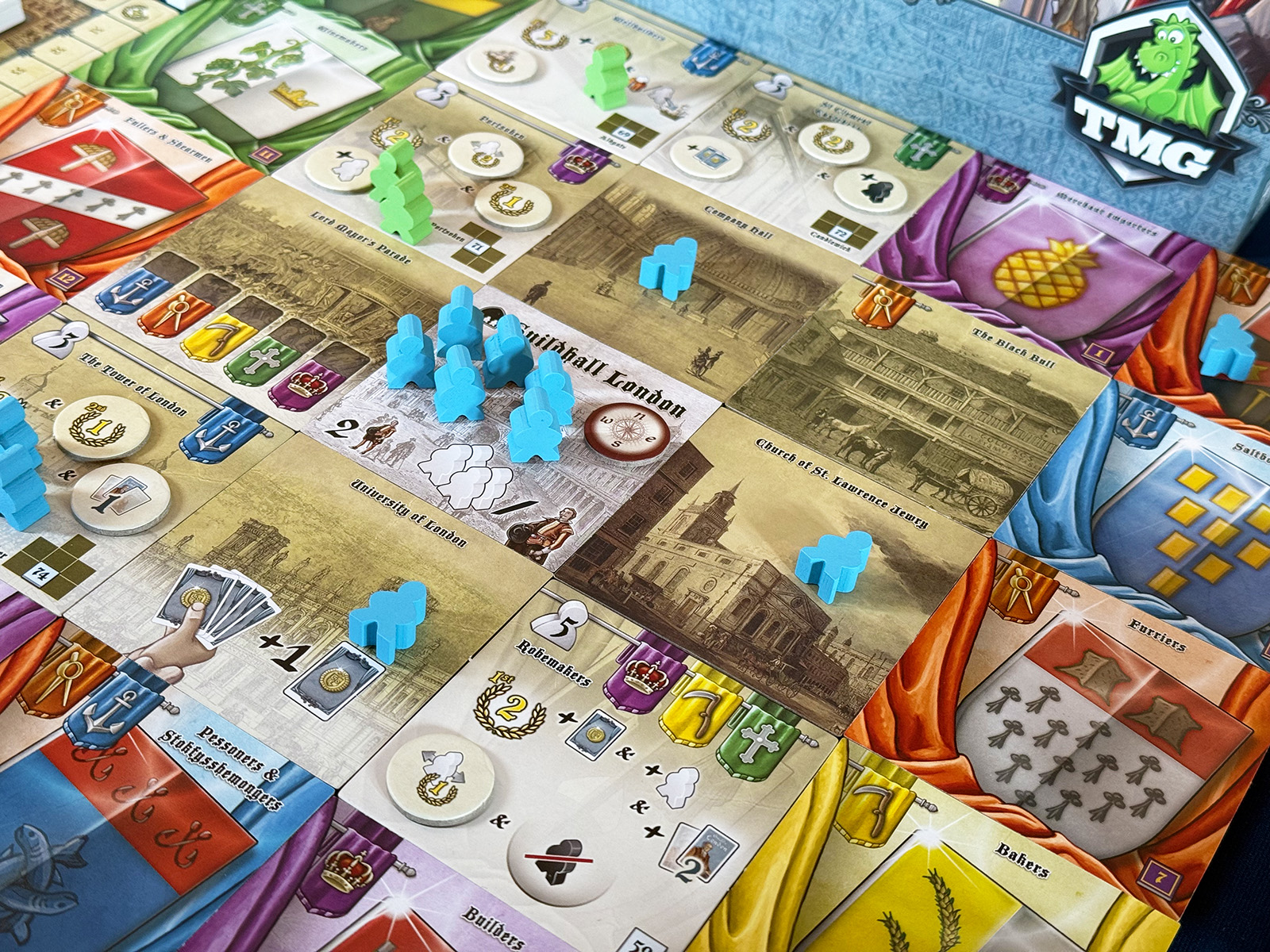
On a positive note, it was a lot of fun to resolve the guild tiles. Bonuses provided interesting help, often with a chaining effect that might help resolve another guild.
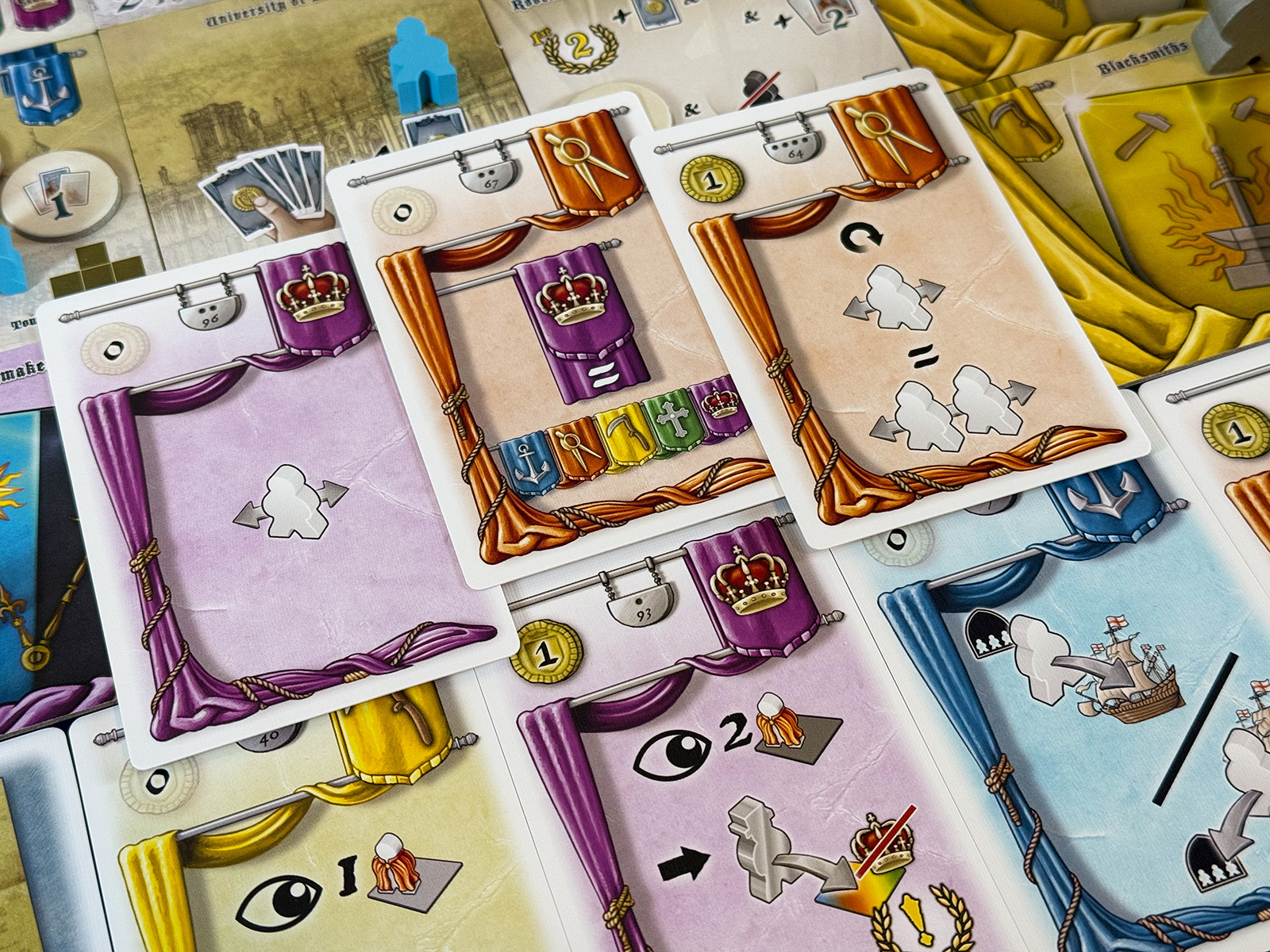
But the iconography. Oh, the iconography! This is present on the tiles and cards. Just when I thought I understood an icon, I found a slight variation and I was wrong. So wrong.
Over half of my play time went into trying to decipher this language, and I never really felt like I knew what to do.
Unfortunately, that confusion and my difficulty in parsing such a dense array of icons made for an unpleasant play.
Matching the Guilds
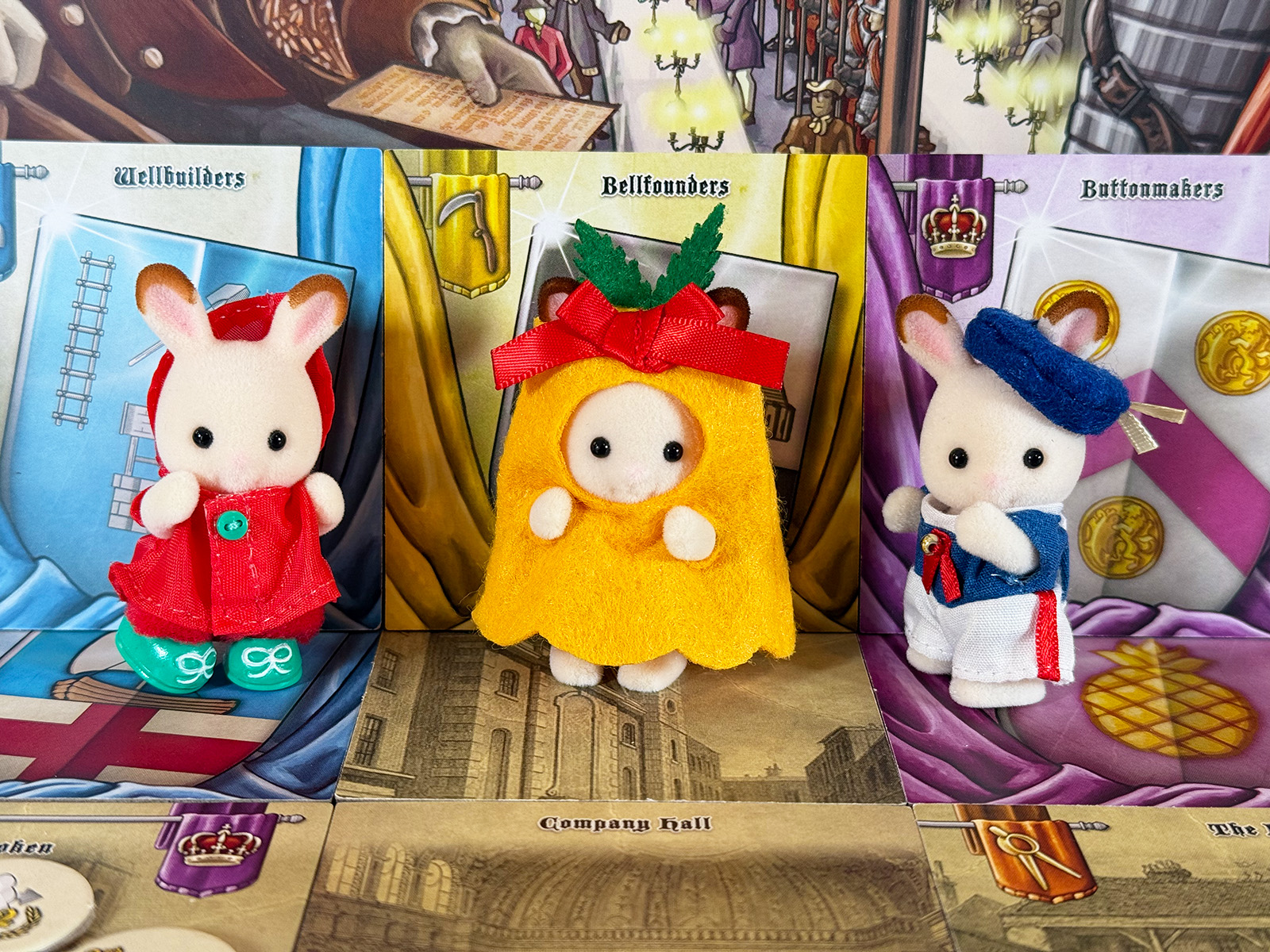
Yet never fear: I had a few Calico Critters around to make the most of this experience! A tiny trio of rabbits stopped by to illustrate their understanding of the guild uniforms. Huh?
Oh! This definitely made sense. The Wellbuilders gained a member dressed in a raincoat and wellies. The Bellfounders found themselves with an appropriate bell costume.
And the Buttonmakers? Why, a new member with an outfit that sported a shiny gold button. Most accurate, indeed!
This was a fun moment after I struggled to play. At least I had a good laugh… Just look at that amazing rabbit bell! Ha!
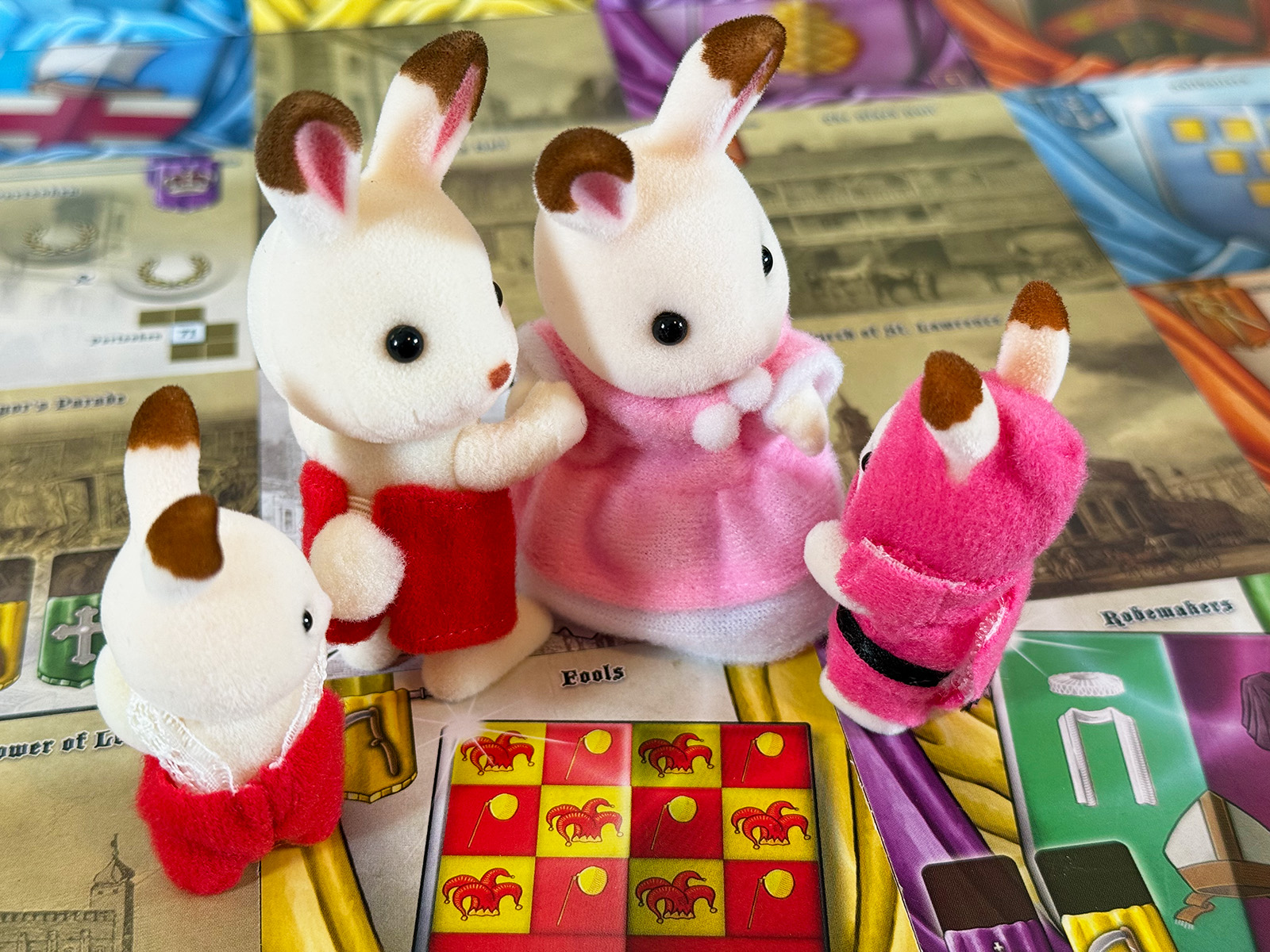
Fools and Robemakers
What happens when your guild headquarters are too close? Chaos. I stopped by to check in on the alley between the Fools and Robemakers, where a dispute had arisen.
While sizing a new customer for a robe, a couple of young rabbits pointed out the fact that their tails seemed to be missing. Everyone sported them… So why not them?
The master robemaker herself had a lot of explaining to do regarding the adornments on her own attire. Suspicious.
Ha ha! No Calico Critters suffered an actual lost tail here, but I clearly got way too much enjoyment out of this silly scene!
Learning and Speaking a Game’s Language
As I struggled throughout this session, I kept going back to what I was struggling with. Was it the rules? Was it the icons? Both offered their own challenges, yet I think the best way I could describe it is confusion over the game’s language. This was encompassed mostly in the iconography, and I felt like I was tossed into play without a useful translation guide.
Time and time again, I felt like I learned the right interpretation of an icon, but then realized it was slightly different. It reminded me of my French lessons from decades ago: Boisson and poisson sound very similar when pronounced out loud, but one means drink and the other means fish. Vastly different! I felt like that’s what I struggled with here.
However, it was one thing to have clear definitions for similar icons… I had to track down card lists for the icons, which also appeared on the tiles. Rather than thinking, “Hey, what’s my best move right now?”, my thoughts were more like “What does this icon even mean?!” It took me out of the game and didn’t give me a chance to even speak the language, so to speak!
Session Overview
Play Number: 5
Expansion: Guilds of London: Wards of London
Solo Mode: Official Solo Variant
Play Details: Standard Difficulty Level
Outcome: 26-67 (Loss)
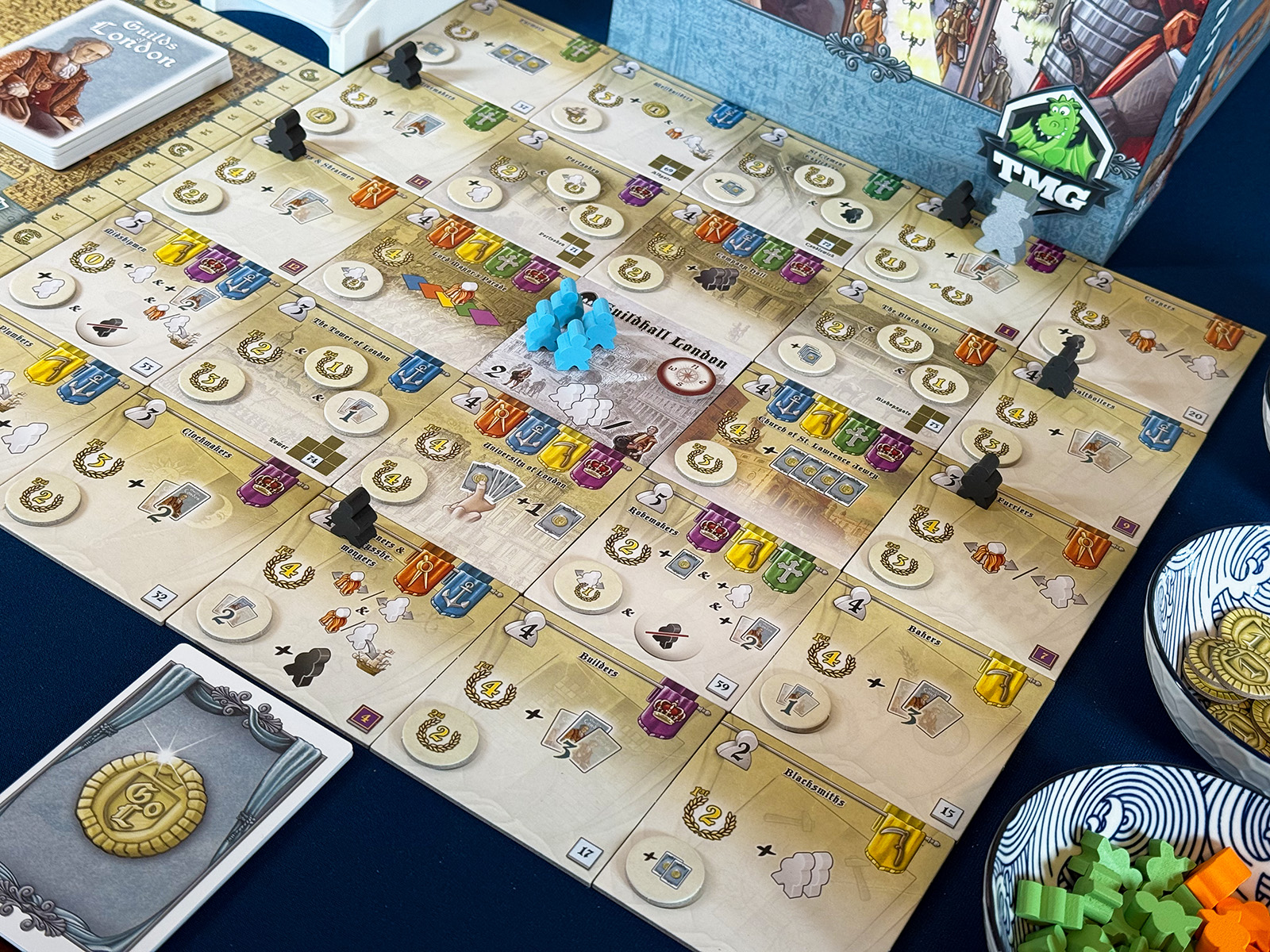
I couldn’t get anything going as I fought with my reference sheets to understand the icons. The worst was when I felt confident and then saw the pair of cards near the bottom left and center. Light grey and slightly darker grey mean different things… Just too much for me to handle, although I still appreciated giving the game another try years later.
%
1 Play
Affordability
Price & Value
7
Functionality
Challenges & Mechanics
6
Originality
Design & Theme
3
Quality
Components & Rules
5
Reusability
Achievement & Enjoyment
3
Variability
Distinctness & Randomness
7
+ Pros (Positives)
- Resolved guild tiles feature bright and colorful coats of arms that look excellent and feel thematically tied to guilds.
- Play time is relatively short with just 10 rounds to play through, and the actual time making decisions is quick.
- Multi-purpose cards help, particularly with a lot of actions that don’t feel useful to the current play or strategies.
- The solo opponent is simple to run and doesn’t take up much time, while still creating a challenge for majorities.
- Tile order makes a big difference, as do the tile numbers, so each play can progress differently with unique priorities.
- Although the new rules of the expansion don’t work with the solo mode, all of the tiles add a lot more variety.
– Cons (Negatives)
- Icons dot the tiles and cards in a way that’s difficult to comprehend, and there is no clear reference for all of them.
- Although it’s nice to see the random second place award tokens, setup takes a bit of time for limited overall variety.
- Gameplay is very dry without a theme, but in a way that makes it hard to find the fun in collecting victory points.
- The rules feel like they’re more confusing than they need to be for a fairly straightforward general round structure.
Victory Conditions
Score the Most Points
- Overall Goal Progress 100%
Goals and Milestones
Score at least 50 points.
Score at least 80 points.
Win at least 1 game at the standard difficulty level.
Continue the Conversation
What do you enjoy about Guilds of London? Have you played with an interesting set of guild tiles or pulled off a neat action sequence? I like the core mechanics, but the iconography and visually busy play area didn’t work for me. This was still fun, though, likely boosted by the Calico Critters visit. Ha ha! Onto another game that I hope I can speak the language of!
0 Comments