The One Hundred Torii: Just One More with Every Expansion
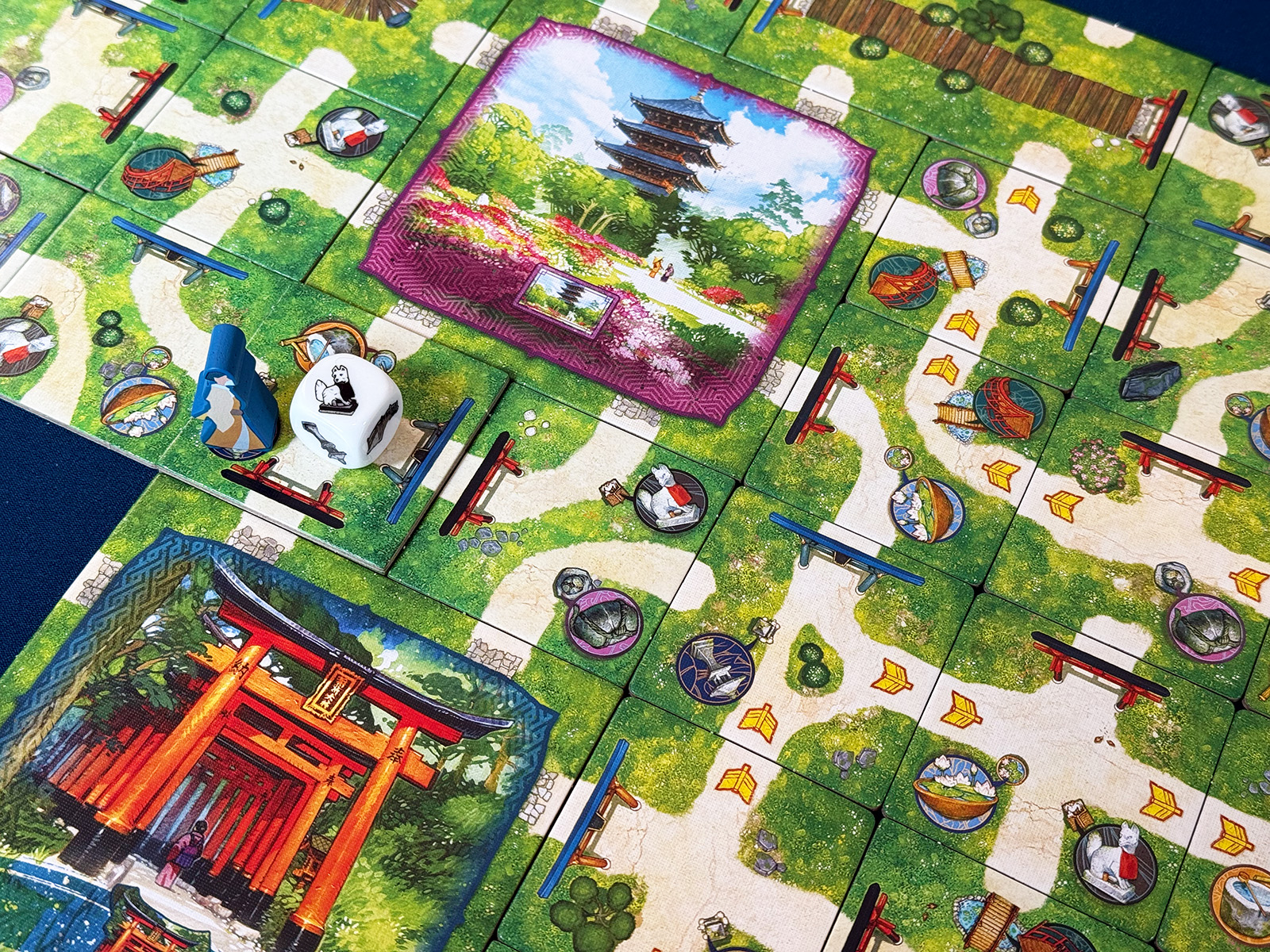
Discover new strategies along the winding paths through a Japanese garden with all of the expansions for The One Hundred Torii.
My plays against Onatsu weren’t done yet, and I still had the mini-expansions to consider for The One Hundred Torii. I also decided to ramp up the difficulty to the maximum, playing with a trio of shrines! This seemed like the right challenge, and I was pretty excited about defeating my nemesis pretty consistently. But would that hold out? I was about to find out!
Disclaimer
I work for the publisher. The base game and all expansions are in my own personal collection after I purchased them. But just a heads up about my connection to the game. Playing was entirely my own doing, thanks to a bad 101 Dalmatians joke!
Game Overview
Game Name: The One Hundred Torii
Publication Year: 2020
Designer: Scott Caputo
Artist: Vincent Dutrait
Publisher: Pencil First Games
Solo Mode: Included in the Base Game
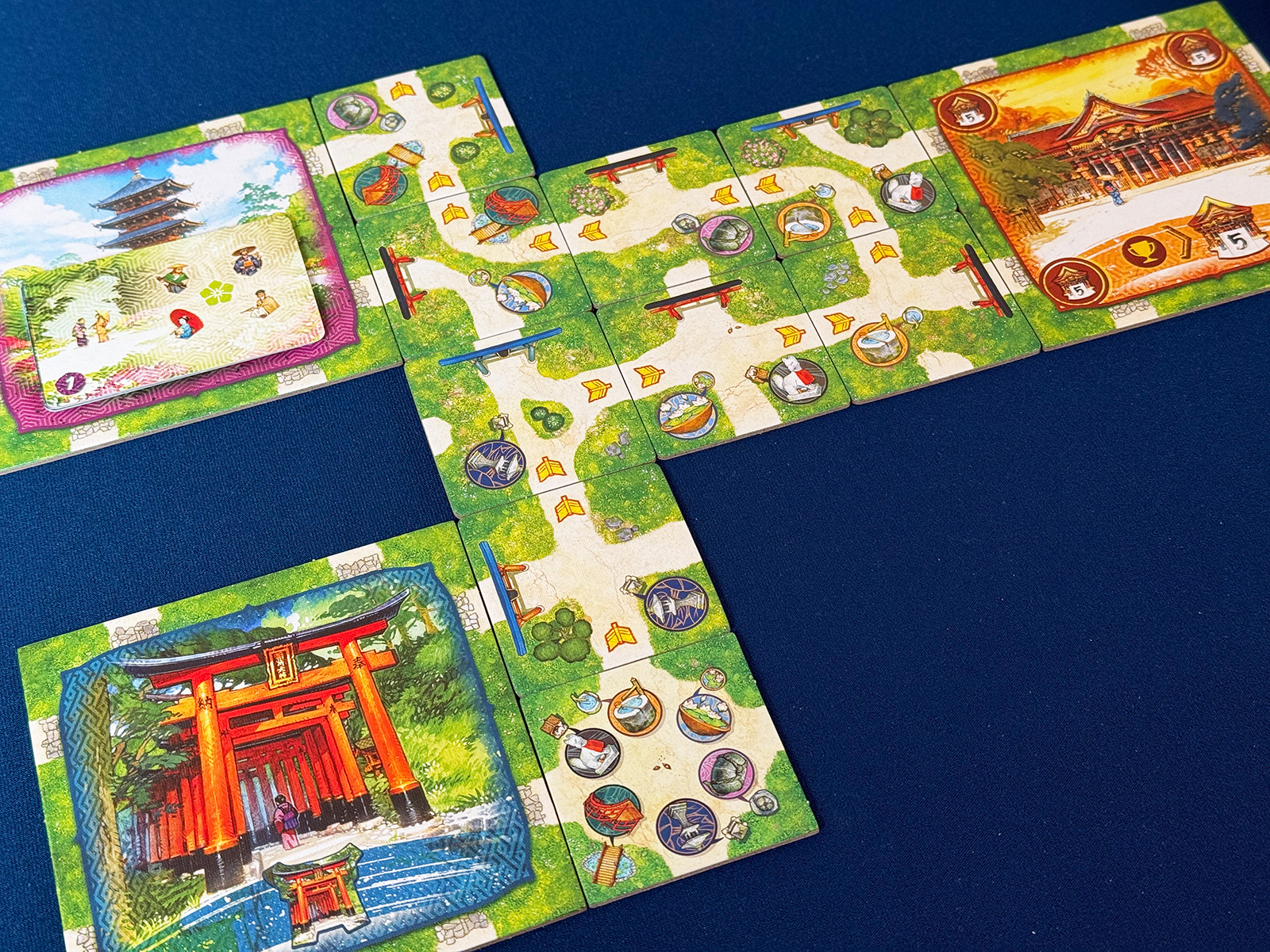
The goal is to collect tokens by creating and tracing paths, ideally traveling through Torii gates or gaining bonuses from the shrines. Many ways to play are possible, and Onatsu can prove to be a very formidable solo opponent! A sense of calm settles in as the journey takes center stage.
First Play
February 5, 2020
Complexity
2
Latest Play
January 24, 2026
Expansions
5
Setup Time
5 Minutes
Lifetime Plays
28
Play Time
30 Minutes
High Score
129
Game Area
36" x 22"
Low Score
17
A Trio of Shrines
I had a nice time trying out the individual shrines from the main expansion on their own. That gave me an idea of my favorites, but it wasn’t long before I knew what to do…
Maximum shrines! In the solo mode, only 3 of 4 may be used with the way the tiles go above Onatsu’s board. But this is still plenty to work with, and I loved the starting paths.
This lent itself to wrapping around the shrines a bit more, which helped out with not making a single long line of tiles.
But it wasn’t much of a challenge, even when I didn’t start with any coins, so I had another way to add new layers.
Mini-Expansion… Woes?
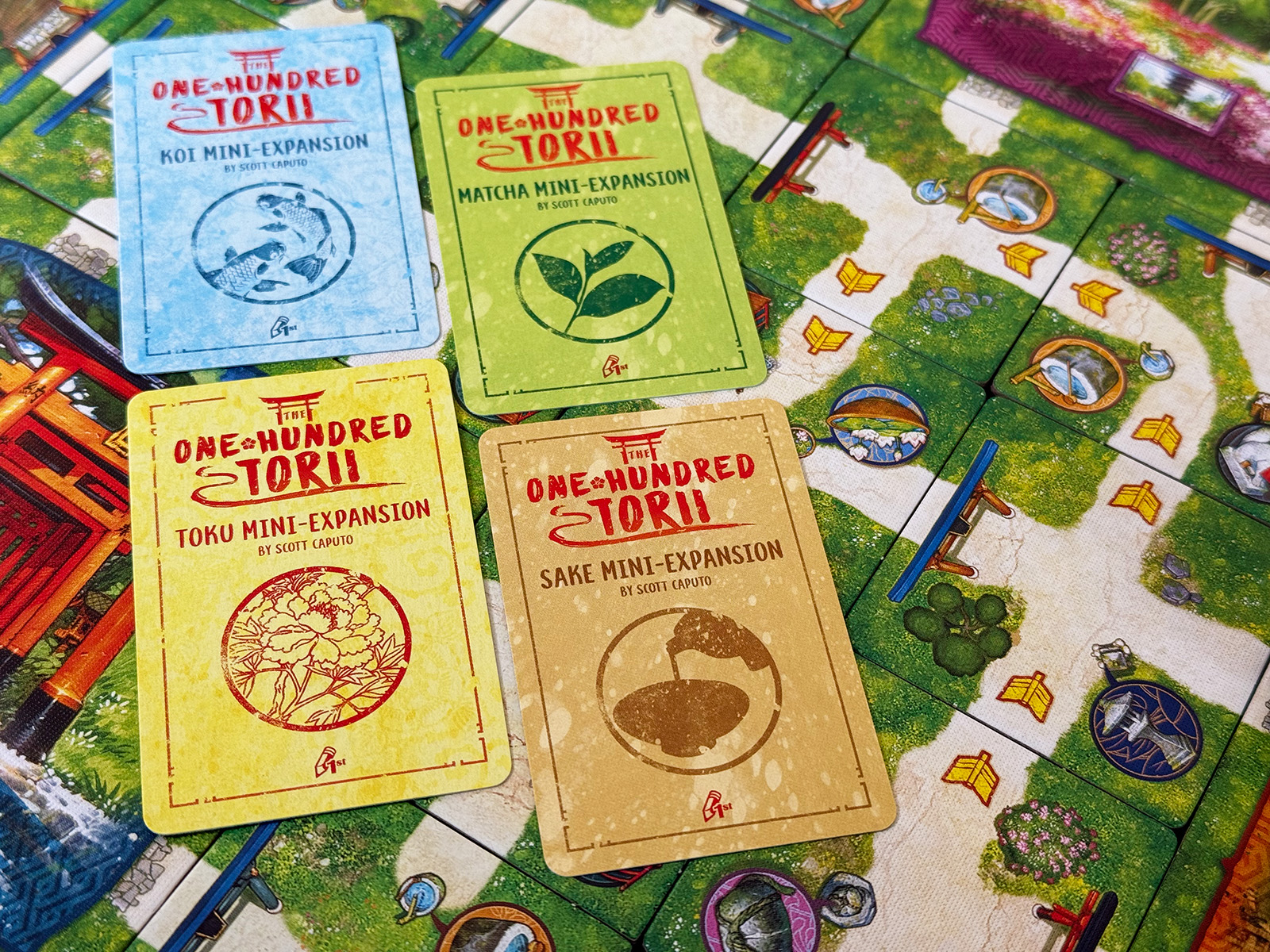
Don’t get me wrong: These individual mini-expansions add a little mechanic, almost like another shrine! But they also increased the complexity and decisions too much for me.
I had a set of cards similar to the To-Ji Temple, but with a bonus for Onatsu. There were cards for short-term benefits and later penalties that required some extra planning.
Racing to collect some of the tokens for bonus cards was nice in theory, but made for a lot of mental overhead.
Finally, I liked having an asymmetric ability, yet keeping track of it was one more thing that slowed me down.
Finding a Place of Zen
The mini-expansions have a lot of potential, particularly in the multiplayer game. Yet with a total of 3 shrines in play, I wanted to increase the difficulty, not the complexity.
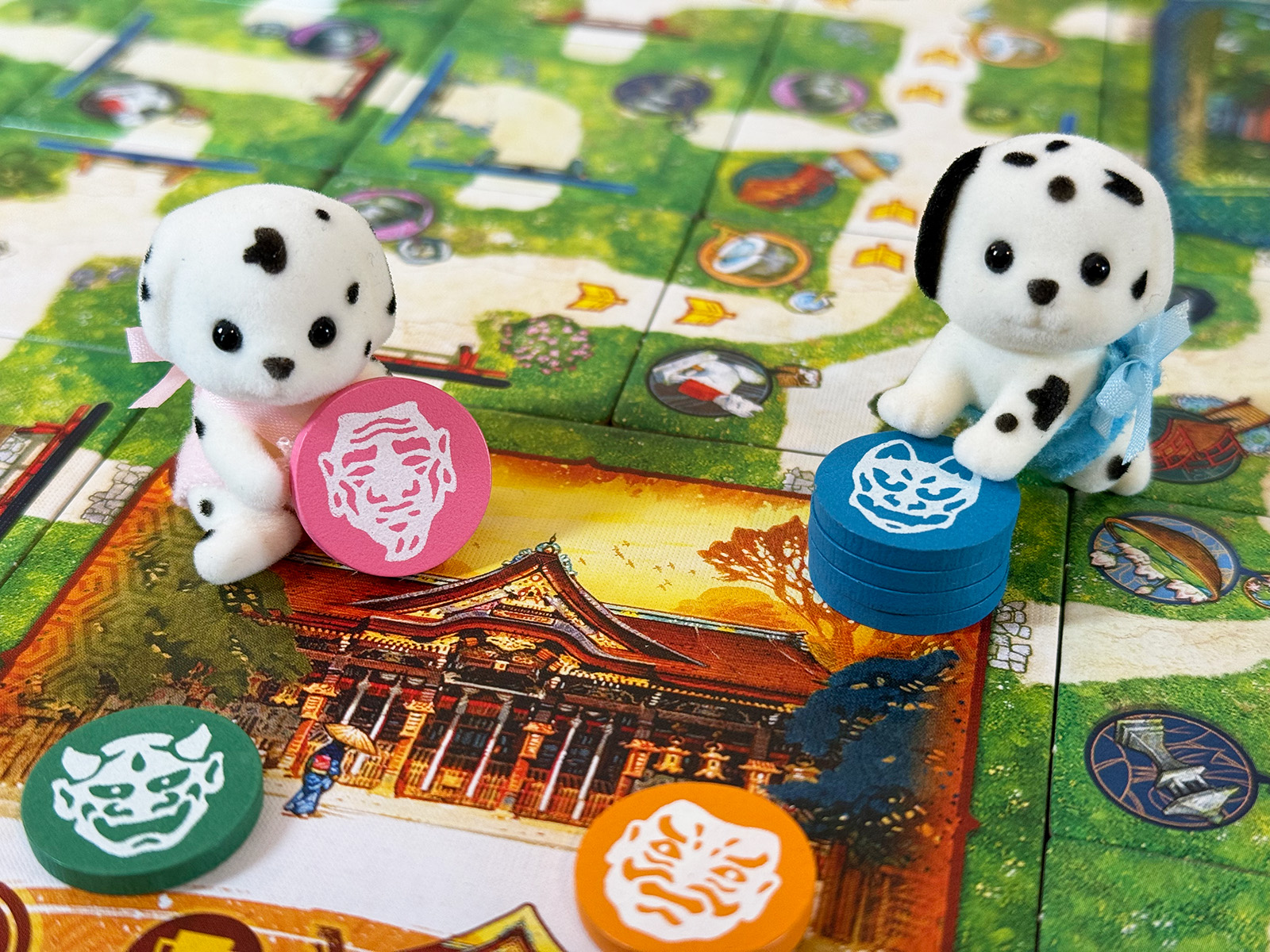
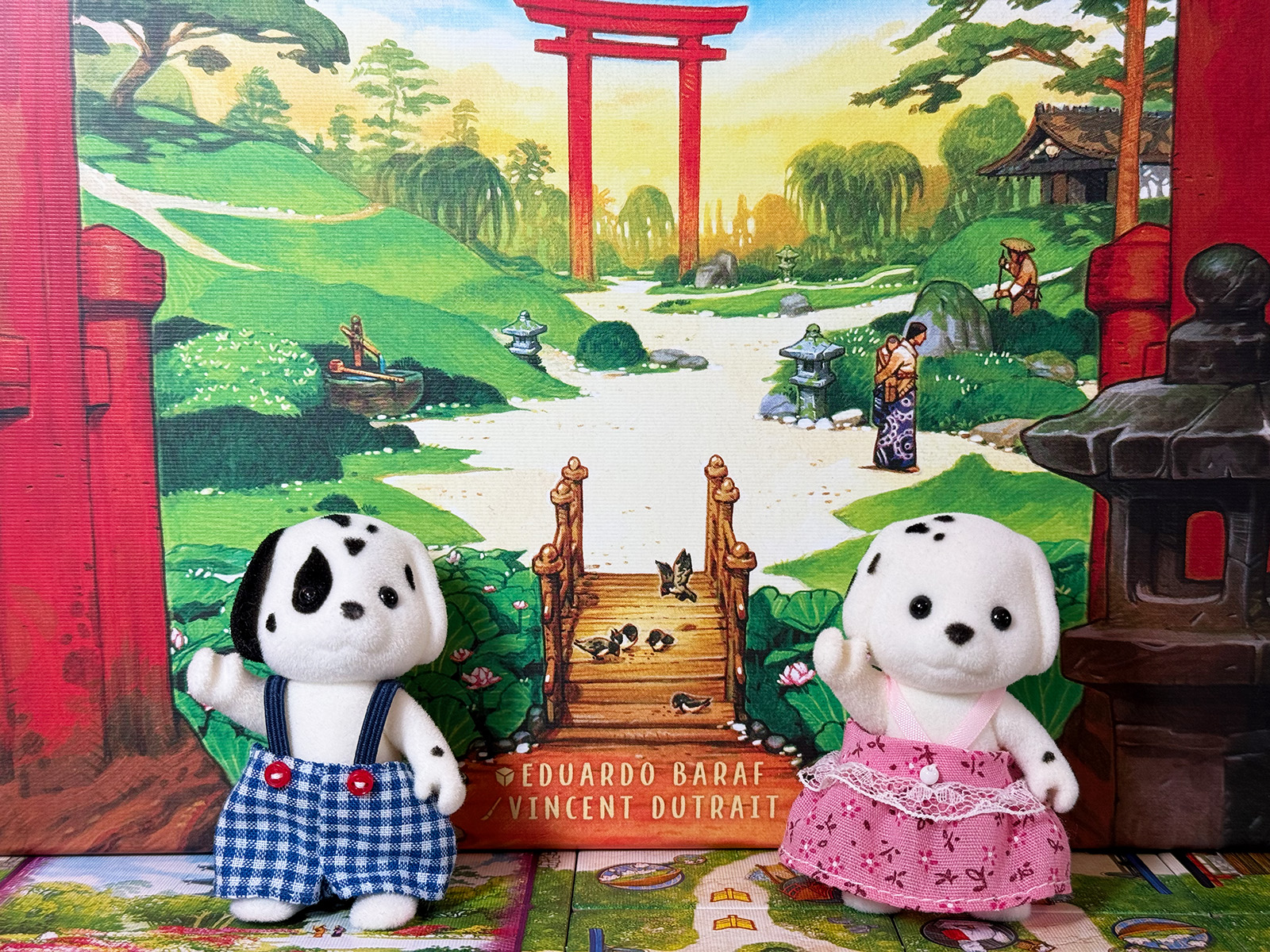
Fortunately, I still wanted to play, and the Calico Critter Dalmatians remained nearby to showcase the Kitano tokens. Definitely my favorite shrine mechanic!
Had I figured Onatsu out? In a way. But this was when I took a step back to remind myself that this is about paths.
There is something satisfying about crafting a lengthy path and earning lots of small tokens. That’s where the joy is!
Return to Nonomiya
From my individual shrine plays, the Nonomiya shrine was my least favorite. It was still a little sad to think I would never play with it, but my mind kept on whirring. A-ha!
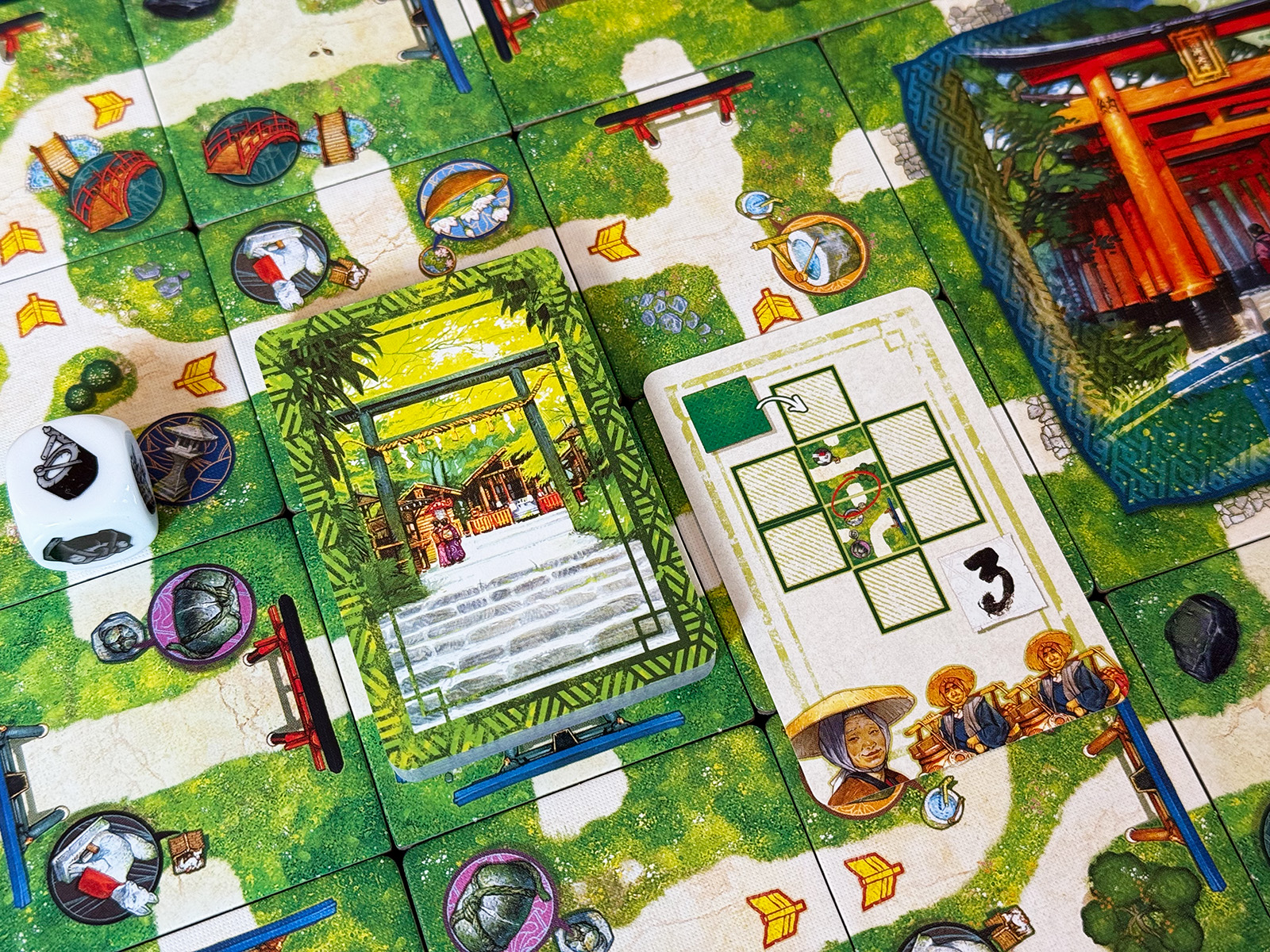
Since I was beating Onatsu by ridiculous margins, I started to test out my own little variant, which wasn’t that complex.
During setup, I drew a Nonomiya card, which represented a required objective for me to actually win. Excellent!
This changed my thinking just enough, although I got lucky and completed this objective early. Next time, I plan to try playing with multiple Nonomiya cards. Challenge accepted!
When It’s Time to Separate the Idea of Winning
Spending many days playing this game got me to a point where I could defeat Onatsu pretty easily. But it was only during final scoring that I felt like it wasn’t a challenge. Time to pause! It’s true that I often know when I’m doing well against Onatsu. Yet those times when I prevent her from taking good tiles, or even gaining none at all, are exciting in the moment.
I still have to carefully think through my tile placements. So in reality, my only slightly bit of disappointment popped up when I realized I nearly doubled Onatsu’s score. Hence, the reason why I want to explore adding Nonomiya cards as required objectives. It’s that sense of limitation and choosing one thing over another that adds to the challenge for me.
Without adding much complexity, having objectives means I might have to give up scoring a lucrative path so I ensure I’ll actually be able to win. That’s not going to be something for everyone, but it’s another example of how much the game can be slightly tweaked and tuned to stay enjoyable. I’m looking forward to defeating Onatsu in the future… Just not so handily!
Session Overview
Play Number: 25-28
Main Expansion: The One Hundred Torii: Diverging Paths
Solo Mode: Included in the Base Game
Play Details: Very Hard Difficulty Level
Outcome: 129-68, 96-105, 118-71, 116-55 (3 Wins & 1 Loss)
It was only when I was distracted with the mini-expansions that Onatsu swooped in for a win, although it was much closer than I expected! For now, I’ll bid a friendly farewell to this one. Still love it, but it’s time to take a break. It was a wonderful time exploring all of the content, and I have a favorite way to play… Plus something new to try next time!
%
20 Plays
Affordability
Price & Value
10
Functionality
Challenges & Mechanics
10
Originality
Design & Theme
7
Quality
Components & Rules
10
Reusability
Achievement & Enjoyment
9
Variability
Distinctness & Randomness
7
+ Pros (Positives)
- All of the content allows for the experience to be customized in many ways with various difficulty levels to try out.
- Visually tracing the paths is a calm sort of experience tied into scoring well, but in a very relaxing sort of way.
- Figuring out the best times to hire the characters is a very fun strategic experience with the limitations.
- Onatsu is a difficult solo opponent most of the time, particularly when playing with multiple expansion shrines.
- The play area typically doesn’t expand that much when using any of the shrines, as the paths tend to wrap around.
- Interesting historical information is included to add more to theme, which comes alive in the beautiful artwork.
– Cons (Negatives)
- Playing with a lot of shrines and mini-expansions can increase the complexity to a point that isn’t as relaxing.
- Certain strategies seem to lead to success a lot, and it can feel like the solo mode has been figured out sometimes.
- With multiple shrines in play, forgetting to gain the benefits of adjacent tiles when scoring a path can happen.
- Finding the icons that are on a path, not nearby paths, can be tricky in areas with a lot of tiles and shrines.
Victory Conditions
Score the Most Points
- Overall Goal Progress 100%
Goals and Milestones
Win at least 1 game at the beginner difficulty level.
Win at least 1 game at the intermediate difficulty level.
Win at least 1 game at the expert difficulty level.
Win at least 1 game with each expansion shrine. (4/4)
Continue the Conversation
Do you have a favorite way to play The One Hundred Torii? Any exciting recent plays against Onatsu? Although I’m done playing for the time being, I enjoyed learning more about my preferred shrines. Creating the paths and visually tracing them was quite relaxing. Judging by my scores, calm was what I needed to win! Such a pretty and peaceful experience.
0 Comments