Habitats: A Preserve for Animals with a Simple Solo Mode
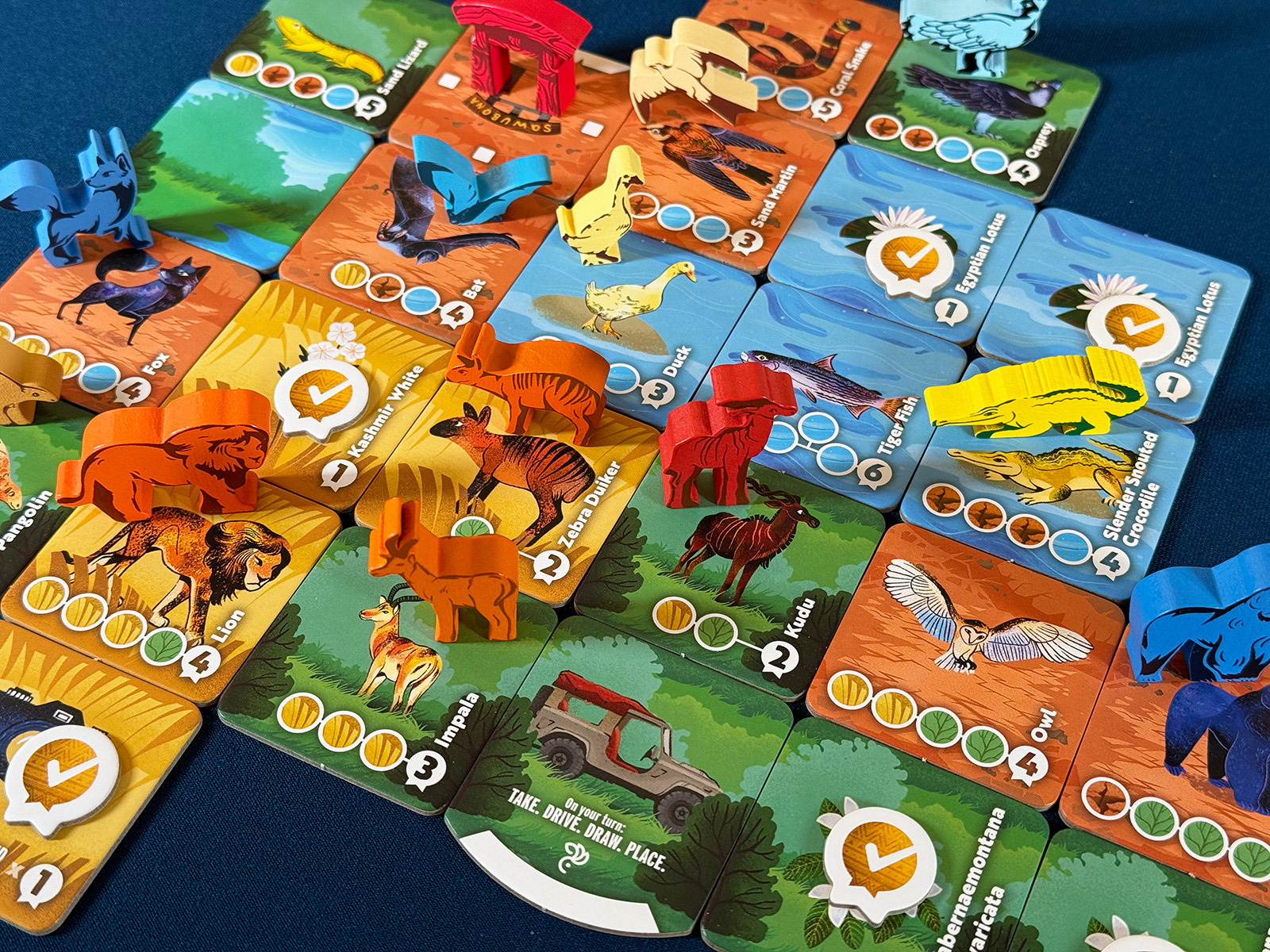
Fill an African animal preserve with all sorts of flora and fauna across various terrain types with the fun puzzle of Habitats.
Tile placement is one of my favorite mechanics, so I was surprised over how long it had been since I last visited Habitats. So many animals! More importantly, though, it’s a quick solo game with easy-to-remember rules. Scoring well takes a bit of planning with the way a little Jeep drives through the market. Time to make a new home for these awesome animals!
Game Overview
Game Name: Habitats
Publication Year: 2016
Designer: Corné van Moorsel
Artists: F. Gavril, D. Profiri, & D. Ramsey
Publisher: Allplay
Solo Mode: Included in the Base Game
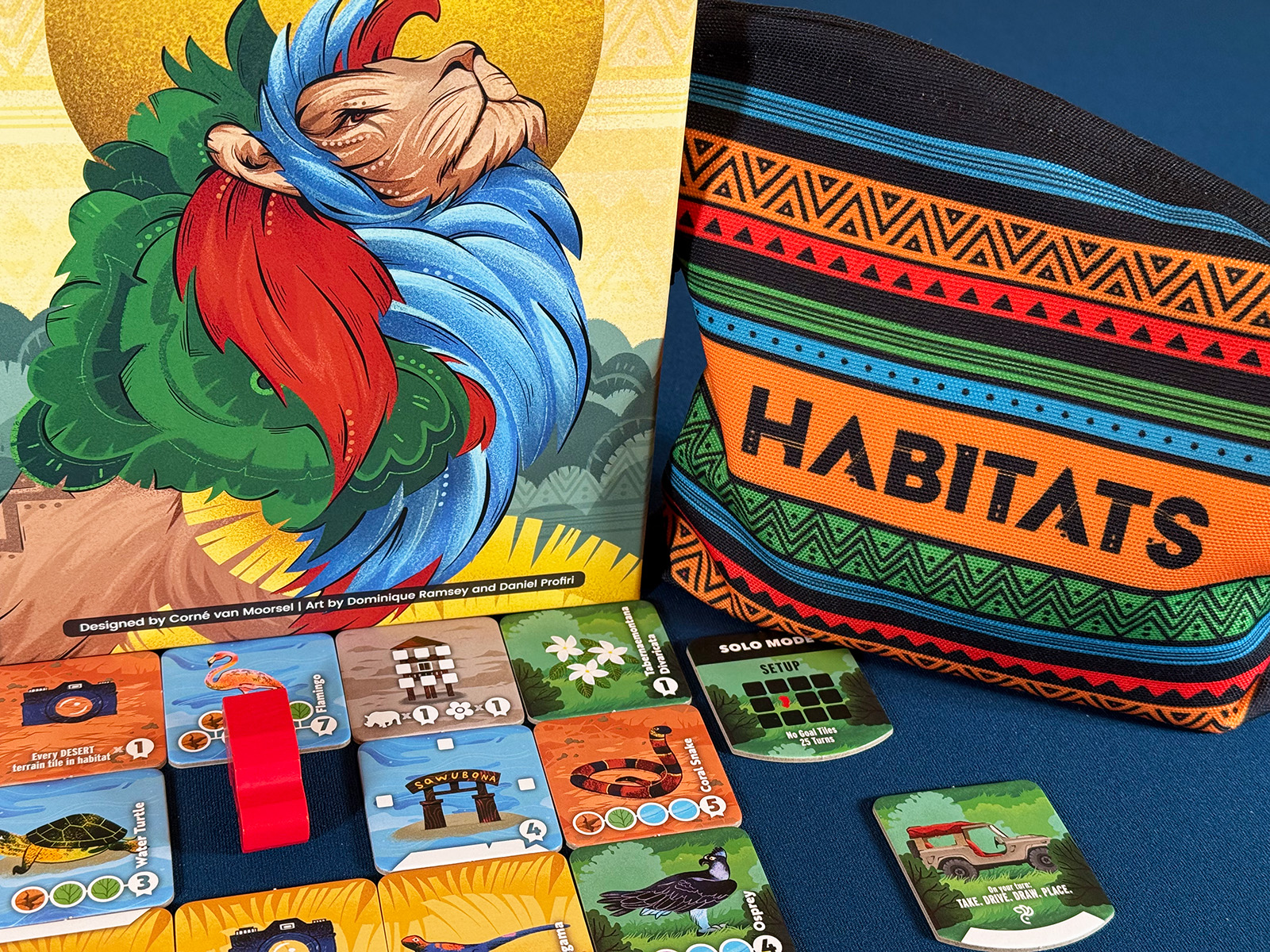
With a total of 25 turns, the solo mode moves very quickly… Just like the Jeep! This moves through the market, setting up tile choices and a bit of planning. Aligning the right terrain types to fulfill an animal’s living conditions is fairly straightforward, yet scoring every tile is a fun challenge.
First Play
August 4, 2023
Complexity
2
Latest Play
April 5, 2026
Expansions
0
Setup Time
Almost None
Lifetime Plays
10
Play Time
10 Minutes
High Score
83
Game Area
16" x 22"
Low Score
47
Tracking the Rounds
Beep beep! I made a noise for my vehicle every time I chose a tile, because why wouldn’t I? Ha ha! As cute as the Jeep is, it also introduces clever decision points about where to go.
There is a round tracker included with the game, but it only counts up to 10. I’ve often lost track when I use it, so I brought out something I’ve left out of my games for a bit.
Hurray for an abacus! This took about a second to update each round. Definitely want to try to use this method more.
Each round took me around 30 seconds. Very snappy, and I ended up with so many wonderful animals in my preserve!
Marking Scoring Tiles
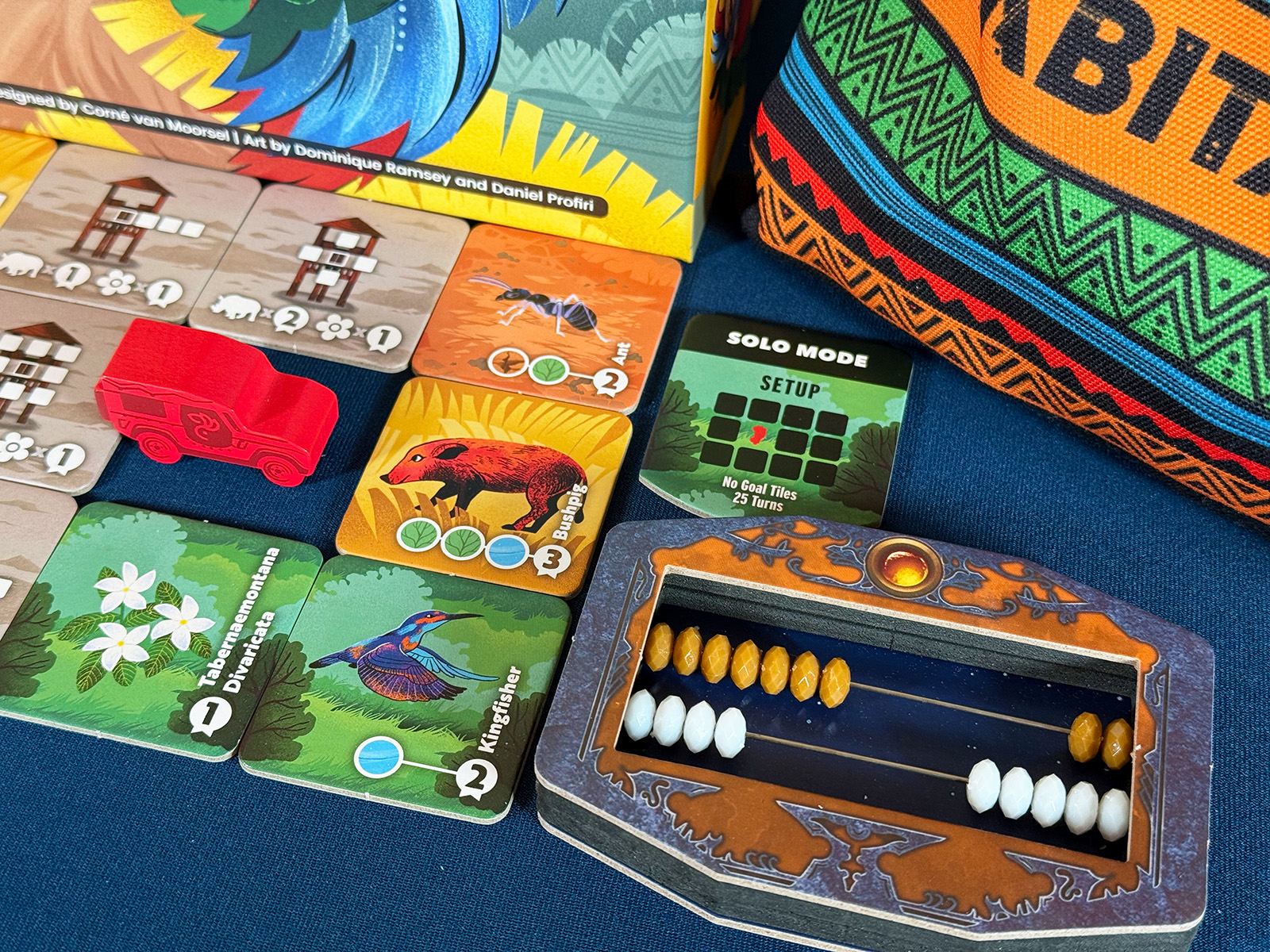
One of the trickiest parts of gameplay is keeping track of the tiles that will score at game end. Flowers, tourists, gates, and the like are pretty easy, but the animals can be tricky.
I’ve found the easiest solution is to place a completed token as soon as I meet the conditions on an animal tile. Then end game scoring is mostly done one row at a time. Very simple!
Also, I recommend just keeping this photo in mind as I move into the other way I played to track completed tiles.
For me, the bright white outlines on the checkmarks are easy to spot at a glance and offer excellent visual contrast.
Welcome, Animals!
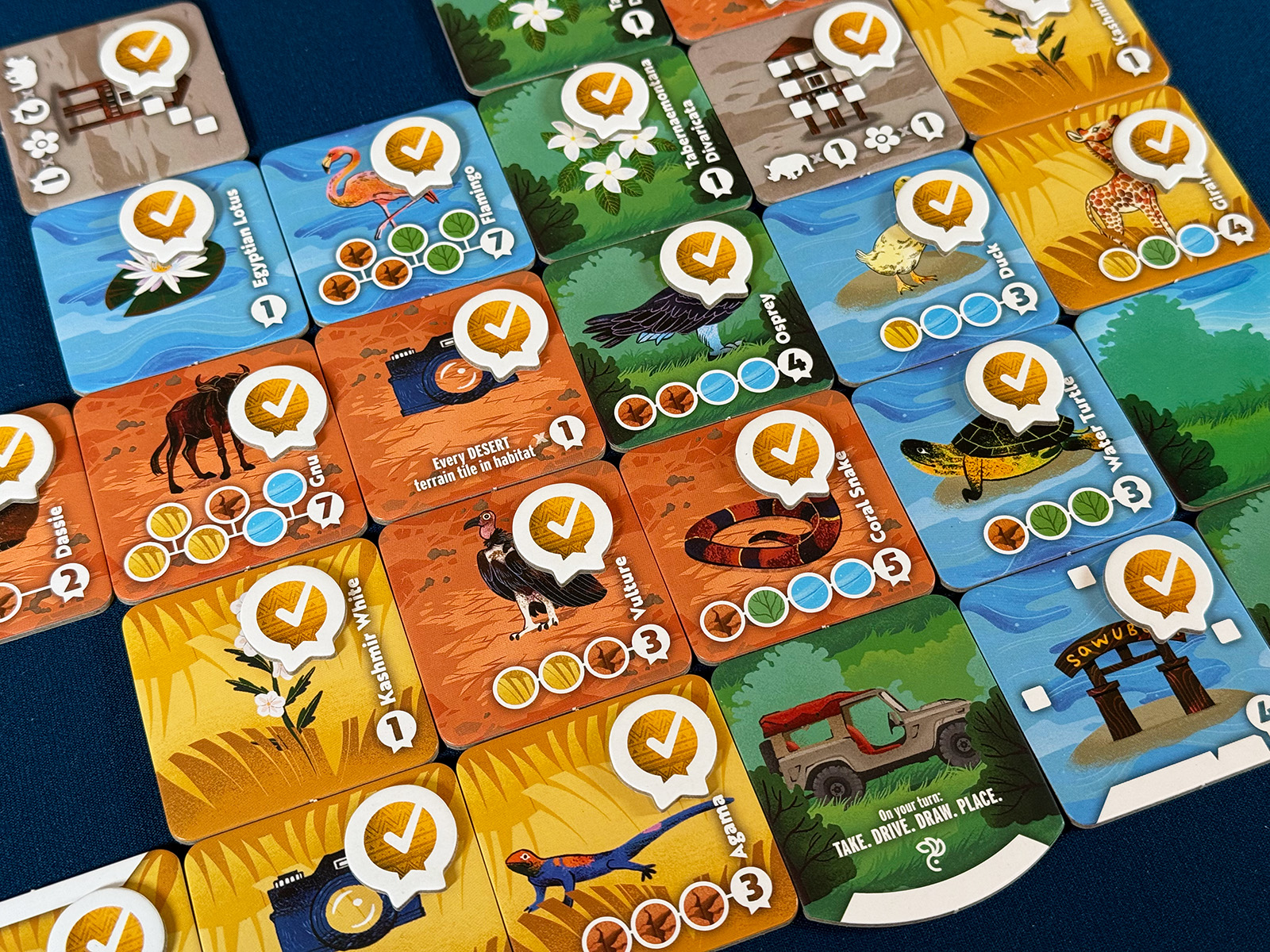
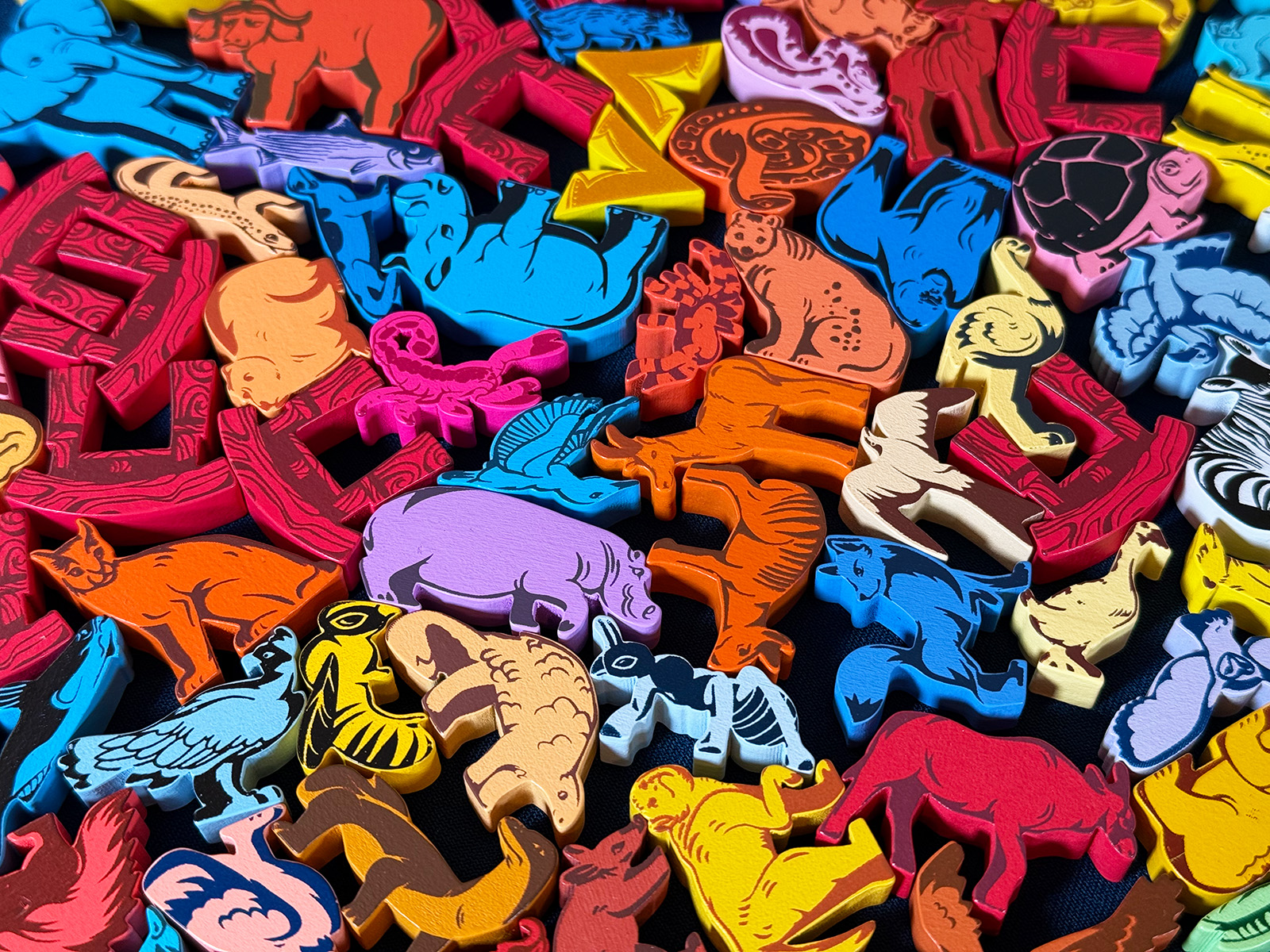
I picked up the fancy extra wooden animal components with the game… Time to bring them back for a bit! These pieces are beautiful and colorful, but I rarely use them.
The idea is to place an animal on its matching tile that will score. My trouble is in visually locating these animals. They aren’t labeled, nor do the colors mean anything.
Look closely, and you’ll likely recognize a few familiar animals or other pieces. But the downtime can be a lot.
It sometimes takes me around a minute or so to find the right animal, as some look a little too similar. Cute, though!
A Very Busy Preserve
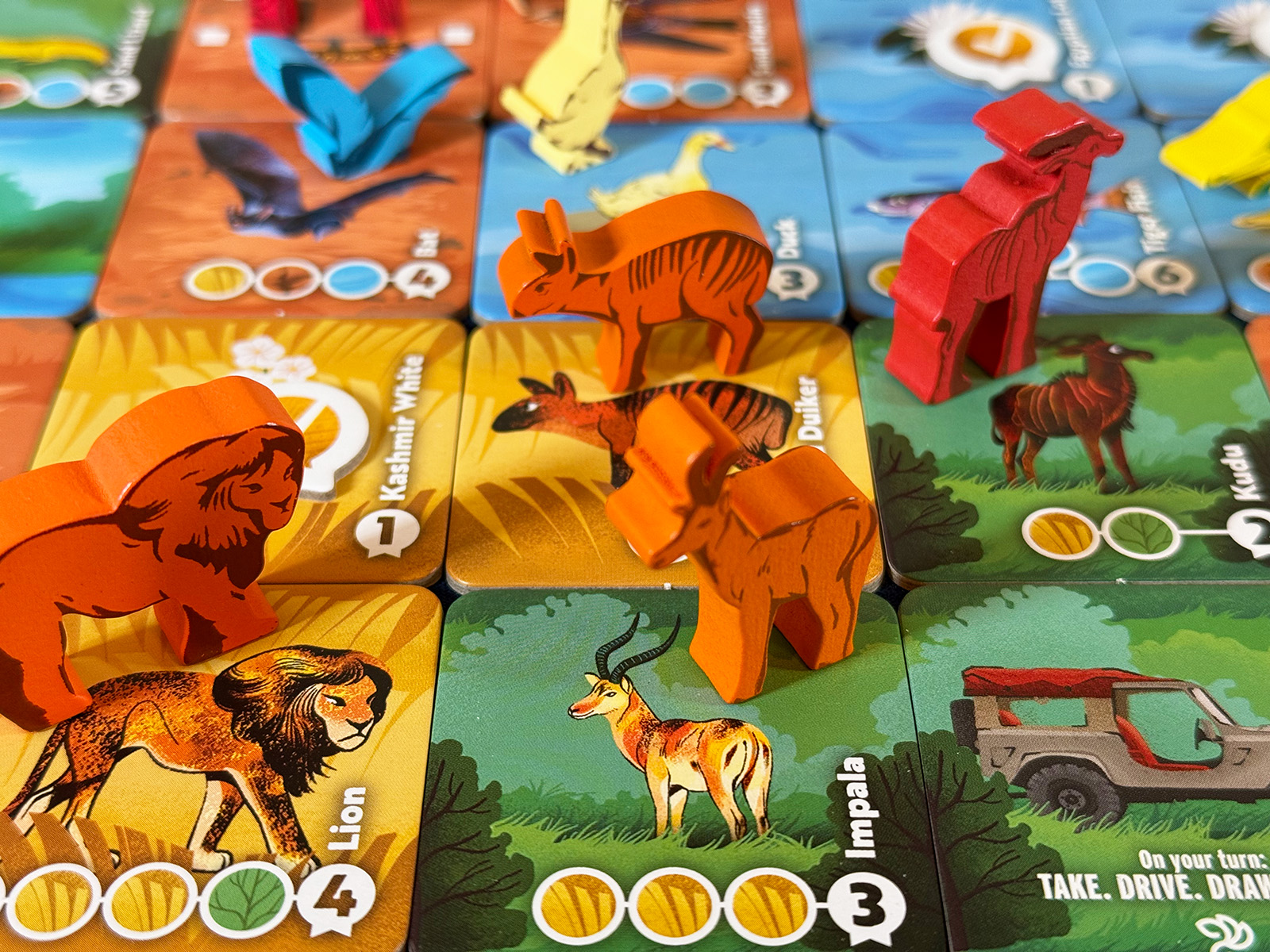
With the wooden animals placed on the tiles, I’ve found that laying them directly on top of the artwork makes it hard to spot the difference in scoring or non-scoring tiles.
This might work by also incorporating the checkmark tokens, but those tiles get crowded! I agree this looks cuter, but in practical terms, I constantly had to check the tiles.
I still haven’t found a good use for these wooden animals yet, although I’m sure I’ll figure something out eventually!
This was an enjoyable session as I put together preserves, guided by the world’s loudest tabletop Jeep. Ha ha!
Giving Deluxe Components a Chance… And a Pass
It’s true that I wanted to switch back to using these wooden animals again. They’re cute and very nicely made! Yet there is a clear distinction between how the game plays when I use the simple checkmark tokens. This is a very quick and easy solo puzzle, so adding on extra time to match up animals drags gameplay out and isn’t as enjoyable for me.
This was the first game that started to make me think about deluxe components, too. I appreciate how awesome a lot of them look, yet usability can sometimes come into play. Simple cardboard tokens can work even better, at a lower price point. Another little lesson that’s saved me a little bit over the last few years and made me appreciate simplicity even more!
Session Overview
Play Number: 9 & 10
Solo Mode: Included in the Base Game
Outcome: 79, 54 (1 Win & 1 Loss)
Despite my troubles with the wooden animals, I still had a good time! My scores were all over the place, though. I’ll also note that even though play time is quick and there isn’t too much involved with the game, I don’t feel the need to play many times in a row. Just a couple of animal preserves work for me! I’ll continue to play with the checkmark tokens and find a use for the components I don’t expect to use again. Good times returning to play this one after a little bit!
%
10 Plays
Affordability
Price & Value
9
Functionality
Challenges & Mechanics
10
Originality
Design & Theme
5
Quality
Components & Rules
10
Reusability
Achievement & Enjoyment
7
Variability
Distinctness & Randomness
7
+ Pros (Positives)
- Choosing the path of the Jeep in the market is interesting for planning future turns and tile choices in later rounds.
- Finding tiles that work well together and help meet all of their scoring requirements is a great and enjoyable moment.
- Play time is very quick with a simple sequence of play that has a handful of focused steps and limited rules overhead.
- Lots of tiles are included for plenty of variety, both in the individual tiles and the types that may show up each play.
- The artwork style is unique and enjoyable to admire across all of the different animals that end up in a preserve.
- Checkmark tokens offer an excellent visual of which tiles will score during game end, speeding up scoring a lot.
– Cons (Negatives)
- Some of the tiles use the same artwork, but have different scoring conditions written in a very tiny font size.
- Although the upgraded wooden animals look nice, they’re hard to match up with the tiles and make scoring harder.
- The included round counter board only has cutouts to count up to 10 rounds, but the solo mode uses 25 rounds.
- Counting connected adjacent terrain types can be a little tedious, especially with tiles that use two different types.
Victory Conditions
Score 60+ Points
- Overall Goal Progress 100%
Goals and Milestones
Score at least 50 points.
Score at least 60 points.
Score at least 70 points.
Score at least 80 points.
Continue the Conversation
What do you think of Habitats? Have you achieved a high score or created a unique sort of animal preserve? I find the game to be a relaxing and quiet sort of experience. No surprises, which is perfect! I don’t score well all the time, and figuring out the path of the Jeep can be a lightweight sort of challenge. Glad I could make a home for all of these animals again!
0 Comments