Beetles, Butterflies, and Jewel Box: Admiring Tiny Beauty
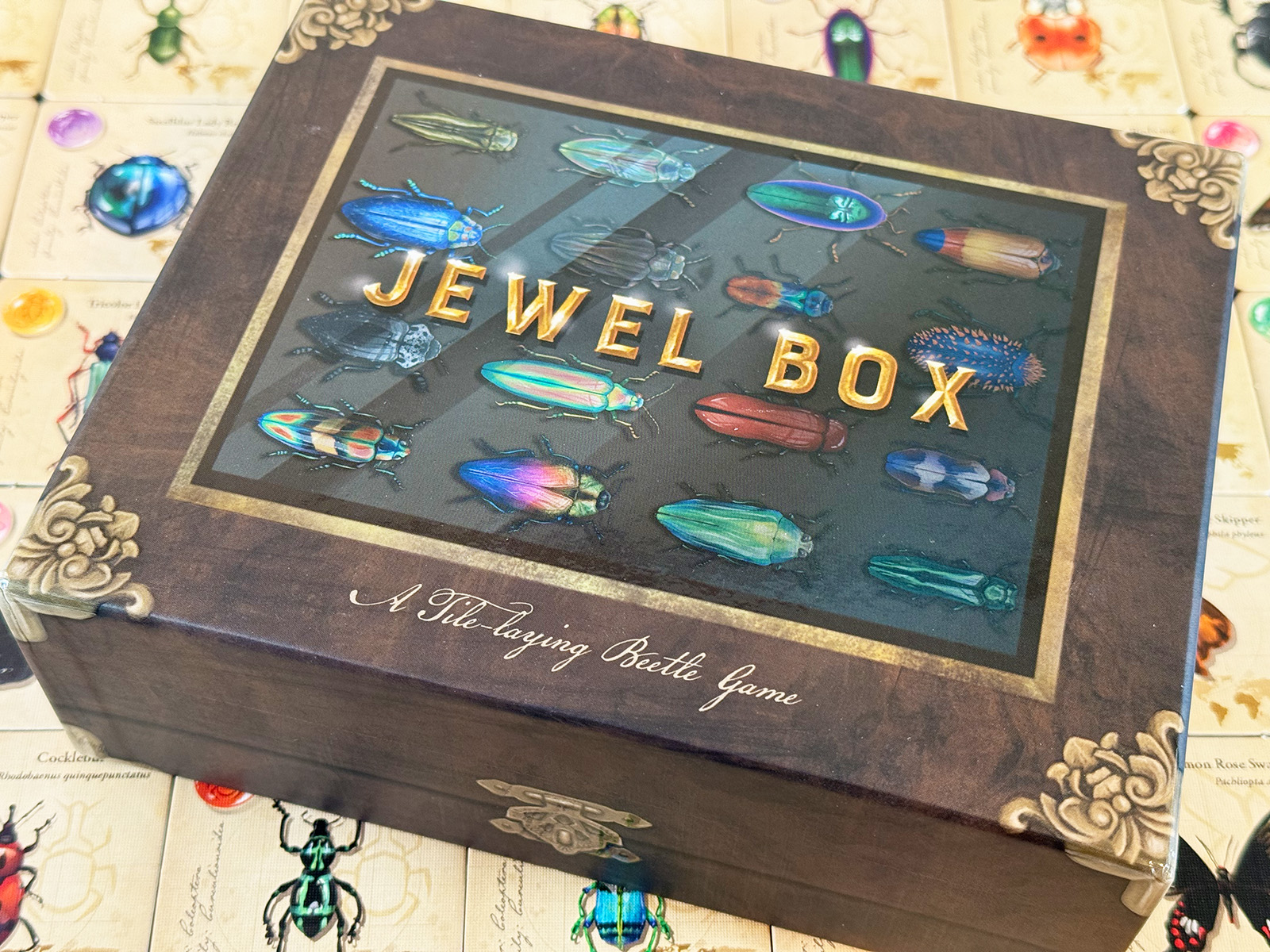
Arrange a collection of beautiful beetles and butterflies into an admirable arrangement with lots of possibilities in Jewel Box.
Content with returning to a lighter solo game, I realized it had been over a year since I last played Jewel Box. This is a lovely tile placement experience all about beetles and, with the expansion, butterflies! I remembered how much I liked the simple rule set and colorful artwork, along with a few beetles one might classify as adorable. Time to make another collection!
Game Overview
Game Name: Jewel Box
Publication Year: 2024
Designer: Zac Loveless
Artist: Megan Galura
Publisher: Lovemore Games
Solo Mode: Included in the Base Game
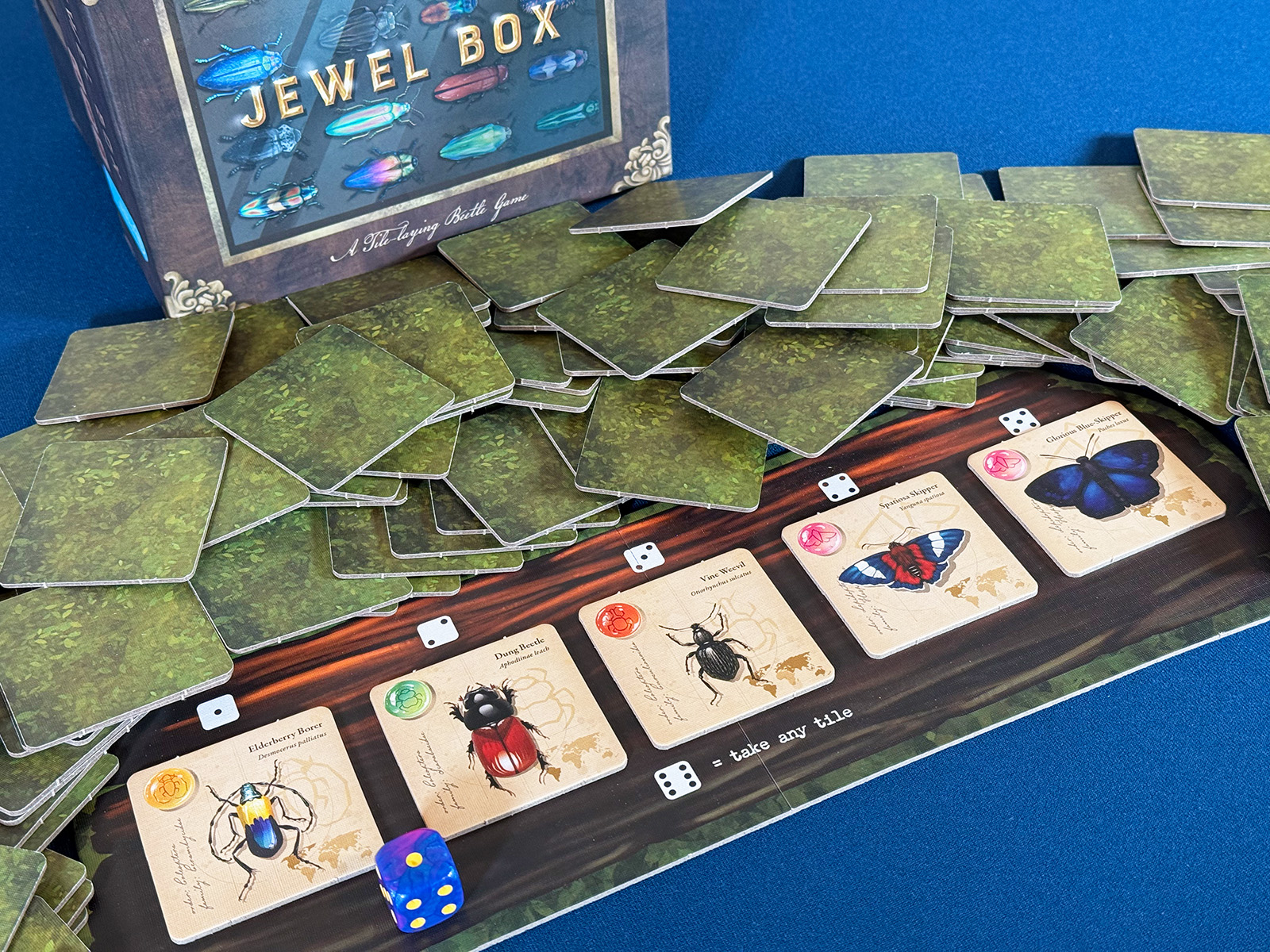
In the solo mode, a 5×5 grid takes shape. Several tiles are available, but aside from a few single-use powers, the tile to add each turn comes down to a roll of the die. This creates neat planning around how to build out the grid, keep spaces open, and carefully place each tile so it scores at game end!
First Play
July 6, 2025
Complexity
2
Latest Play
July 22, 2026
Expansions
1
Setup Time
Almost None
Lifetime Plays
10
Play Time
10 Minutes
High Score
65
Game Area
20" x 22"
Low Score
42
The Tiniest Beauty
I absolutely love the artwork in this game. Every tile features a unique critter, and coming from someone who doesn’t always enjoy creepy crawlies, this game is amazing!
The colors are bright, and often surprising. Flipping over new tiles is always an interesting moment.
Sure, not all of them come in fluorescent patterns, but the variety is what I love to see. Maybe it’s a good thing the choice comes down to a roll… I would take forever. Ha ha!
Part of me wondered if this one would be too simple for my tastes, but I loved the challenge of maximizing my score!
Neatly Arranged
So pretty! The strategy revolves around how to fill in the grid for a collection. The first few tiles might seem pretty obvious, but this quickly turns into a challenging puzzle.
The available tiles need to be accounted for as a new one is placed. A random one is replaced at the end of a round, so it’s not like every turn is easy to plan for all outcomes.
With the butterflies, I had to consider connected areas and mirroring placement across the horizontal or vertical.
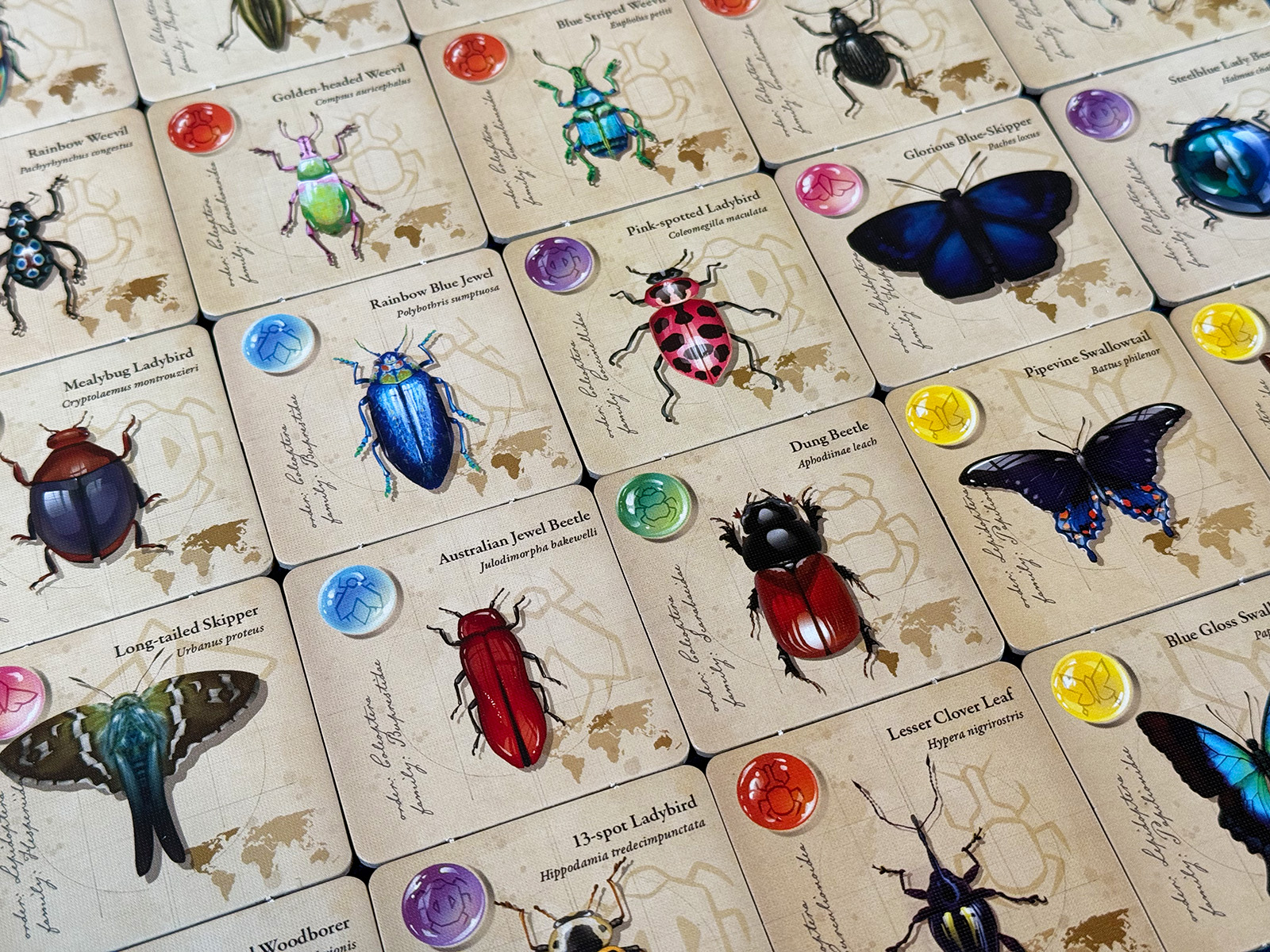
Notice my Long-tailed Skipper in the lower left… No symmetry there, so no victory points. A tricky last tile!
Up Close and Personal
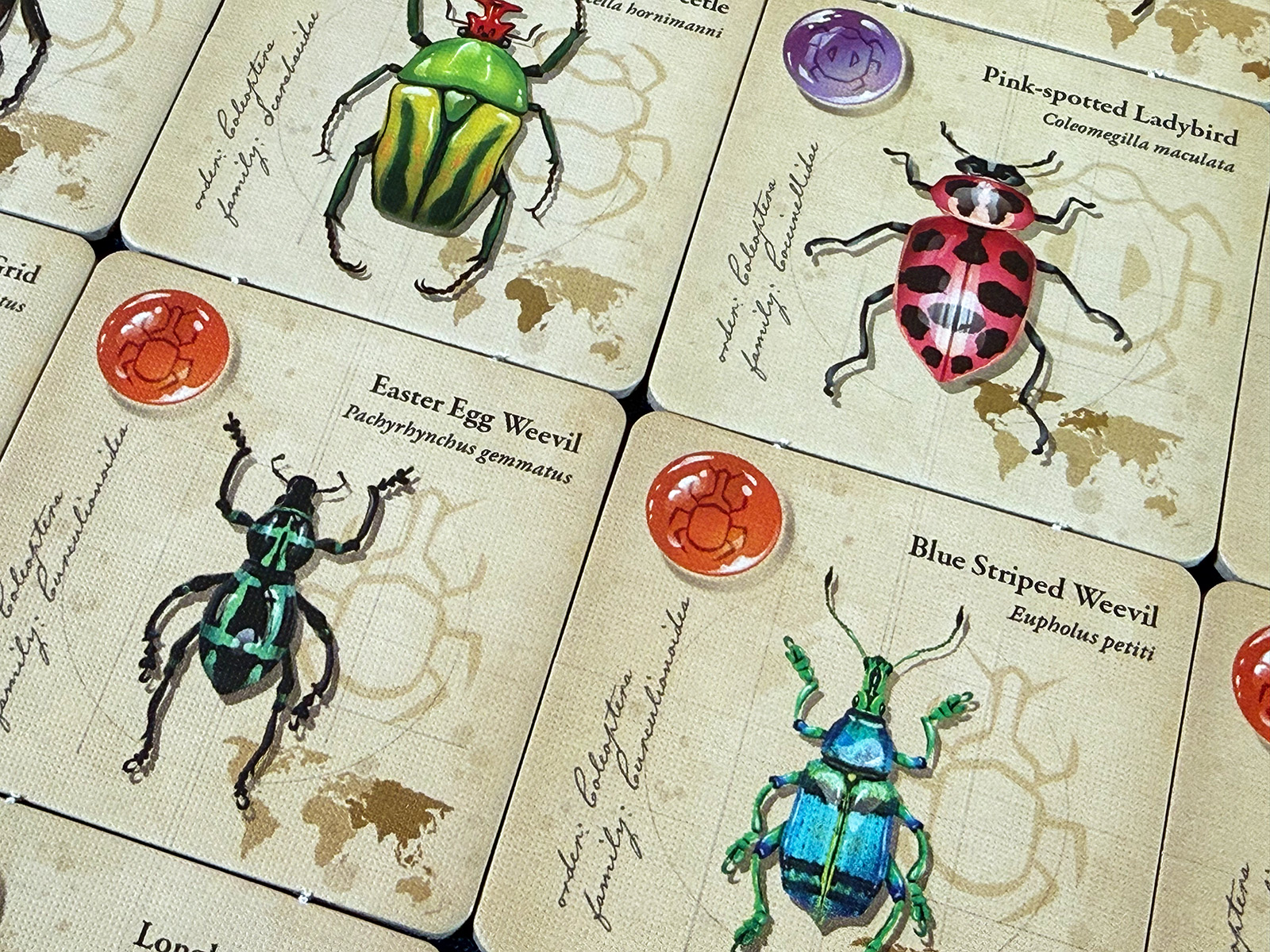
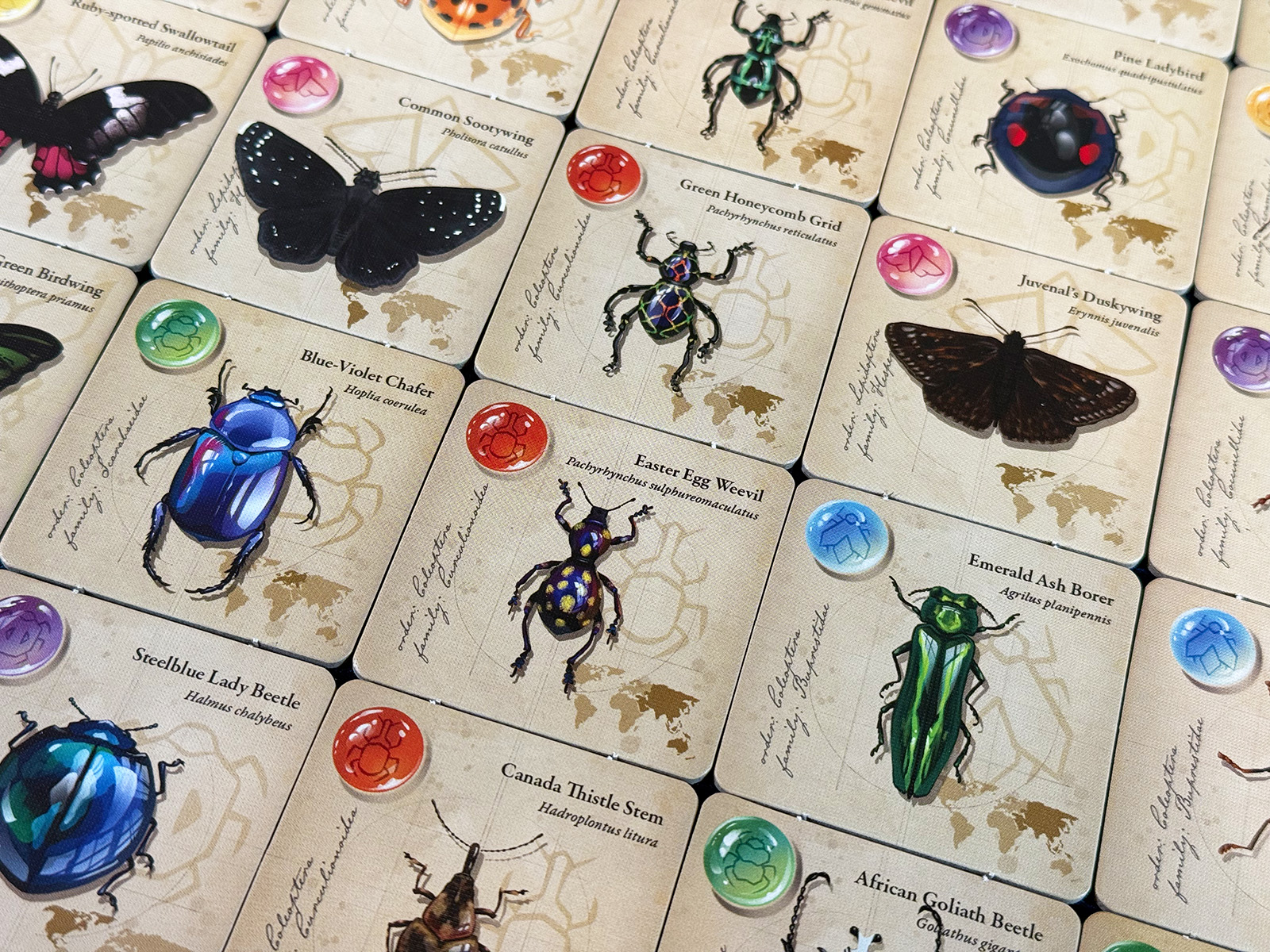
I found myself pausing at the end of each play to admire some of the prettiest beetles in my collection. Their names often made sense, but some were pretty interesting!
Like the Easter Egg Weevil. Ha! Looking closely, other details are present, like the scientific name, order, family, and geographic region of the world where it can be found.
I lamented the fact that I wouldn’t see some of these anywhere near me, but maybe imaginary weevils are best!
My scores varied greatly, although I found neat strategies and used the tools now and then to choose a few tiles.
Crawling Along
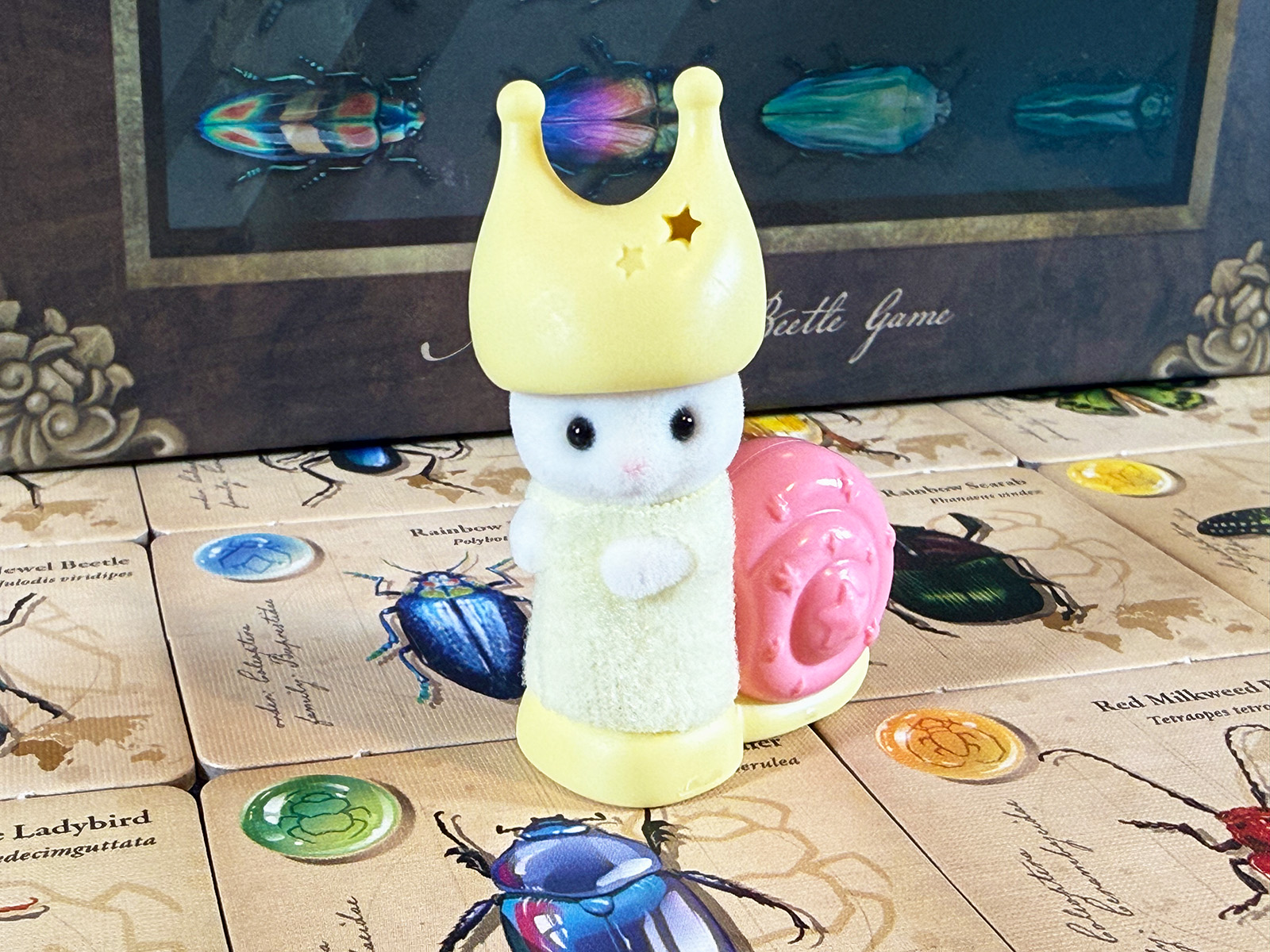
Snail! So I didn’t exactly have a lot of Calico Critters to match the theme, but seeing all of these tiny creatures made me think of them crawling along. Crawling in style now. Ha!
This figure arrived recently as a gift from my boss, and I find it to be absolutely hilarious in the cutest way. Who would have thought to dress up a tiny kitten as a snail?!
Anyway, this session solidified my enjoyment of the game. I liked how it wasn’t about drafting tiles, but arranging them.
I achieved my personal best in the highest scoring tier, and expect I’ll be back to appreciate these little critters again!
Choice vs. Arrangement: A Nuanced Difference
In a lot of tile-related games with a central board, drafting or choosing the tile is the mechanic I’m most used to. This often comes with different costs for picking newer tiles, or at least making each new tile a balance between costs and benefits. With this game, tiles are assigned by rolling a die. Only on a value of 6 is a choice allowed, which can be quite neat!
But where’s the fun in being assigned a tile? The arrangement! Starting a grid begins with the first tile. After that, I enjoyed the puzzle of not only placing a new tile, but keeping an eye on the others that might be available in the next round. Should I keep that space reserved for a jewel beetle? Wait! That space absolutely needs a skipper butterfly. Keep it clear at all costs!
Single-use tools provide ways to mitigate bad luck, or pick up a highly desired tile. There are 3 such tools, and not using them confers victory points. There are some callbacks to tile drafting, yet the challenge is in filling in the grid with careful tile placement. I love it! The difference in mechanics may look like player agency is lost, but it’s there in another way.
Session Overview
Play Number: 5-10
Expansion: Jewel Box: Fluttering Expedition
Solo Mode: Included in the Base Game
Outcome: 42, 65, 58, 53, 60, 49 (2 Wins & 4 Losses)
I made some risky moves, which sometimes paid off, but often resulted in a few tiles worth nothing. No matter! Each play was quick with interesting decisions. I might have found my new favorite in the game… Look at that colorful and rotund Steelblue Lady Beetle! Too cute. This has some neat thought processes around placing a tile that isn’t chosen, leading to a different sort of decision making. Fun!
%
10 Plays
Affordability
Price & Value
8
Functionality
Challenges & Mechanics
10
Originality
Design & Theme
5
Quality
Components & Rules
10
Reusability
Achievement & Enjoyment
7
Variability
Distinctness & Randomness
7
+ Pros (Positives)
- All of the artwork is excellent with plenty of bright colors that seem to shine off of most tiles in a pleasant way.
- Play time is quick and everything flows nicely with a clear sequence of play and lightweight decisions.
- The final 5×5 grid is beautiful to admire with all of the various beetles and butterflies, each of which is unique.
- Scoring doesn’t take too much time and is typically very straightforward, even with some of the more complex types.
- Deciding how to arrange the tiles as the grid is filled in is an interesting challenge that offers fun choices.
- It’s easy enough to have stacks of tiles, yet spreading them out around the log board is enjoyable and thematic.
– Cons (Negatives)
- Sometimes, there’s not much that can be done with a tile, although planning well can alleviate the worst luck.
- Keeping track of the types of scoring can take a little extra time to identify the symbols and their conditions.
- Rolling the die for tile selection can take a few plays to get used to, as tile drafting feels like a more familiar concept.
- The extra information on the tiles doesn’t detract from the symbol or art, but is very small in a hard-to-read font.
Victory Conditions
Score 60+ Points
- Overall Goal Progress 67%
Goals and Milestones
Score at least 60 points.
Score at least 65 points.
Score at least 70 points.
Continue the Conversation
What do you enjoy the most about Jewel Box? Do you have a favorite tile or type in the game? I appreciate this one for what it does in a simple way, but with more going on than just tossing assigned tiles into a grid. There’s a puzzle amidst the beautiful artwork. I’m glad I got this one back to my table, and it’s definitely not crawling out of my collection. Ha ha!
0 Comments